Stove Repair in Los Angeles: A Practical Guide to Fast, Reliable Stove Service
What Does Stove Repair in Los Angeles Include?

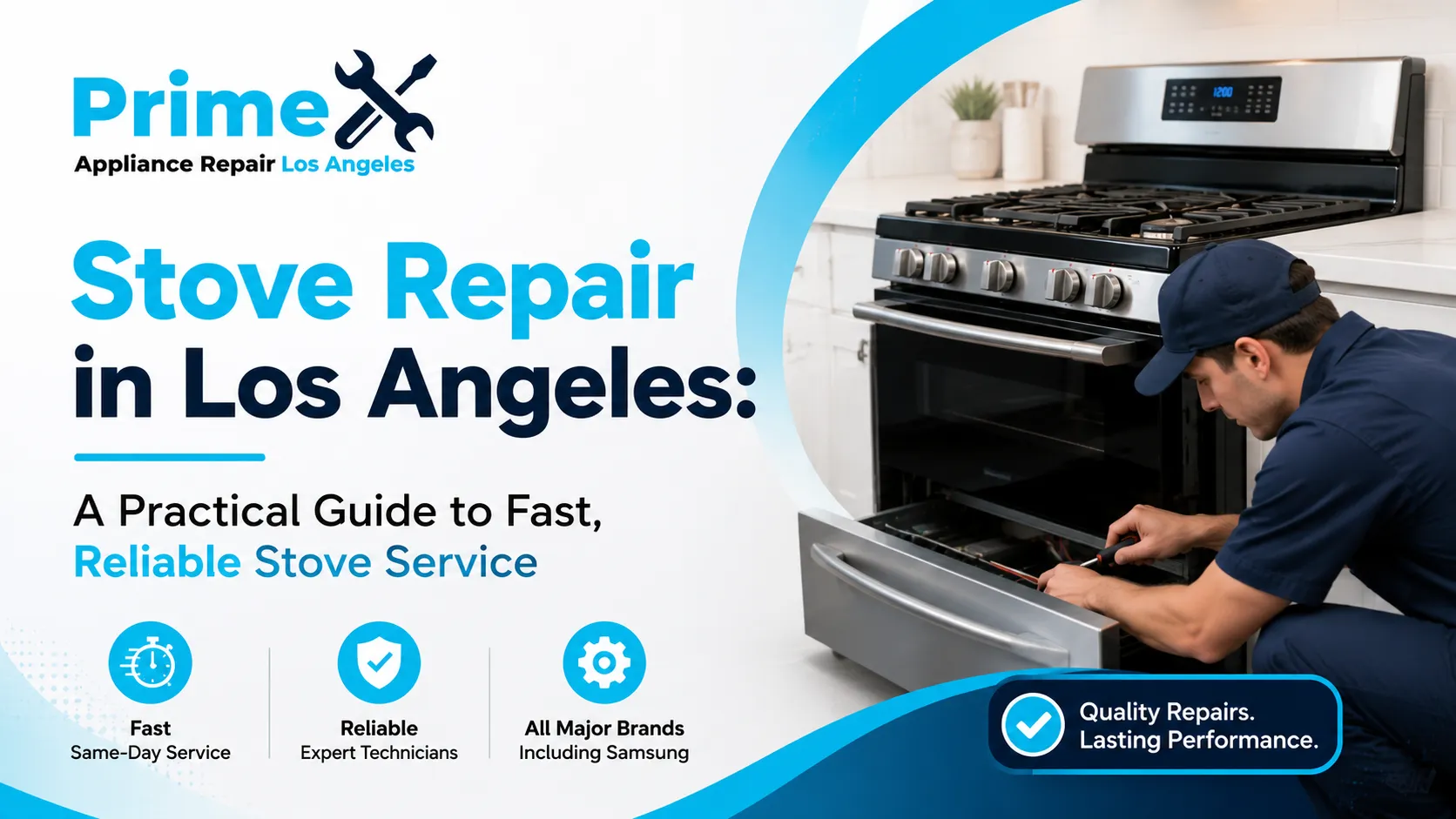
Stove repair involves diagnosing and correcting problems that prevent a stove from operating normally, safely, or efficiently.
Depending on the appliance and the symptoms, a technician may inspect the burners or heating elements, electrical connections, switches, temperature controls, wiring, sensors, control components, and other parts associated with the reported problem.
A stove that does not heat is not necessarily suffering from the same failure as another stove with identical symptoms. For example, one appliance might have a failed heating element, while another could have a damaged switch or electrical connection. That is why diagnosis matters.
For homeowners searching for stove repair in Los Angeles, professional service is particularly useful when the cause cannot be determined through simple checks such as confirming that the appliance has power and that controls are correctly set.
What Are the Most Common Stove Problems?
Stoves contain multiple components that work together to produce and regulate heat. Normal wear, damaged components, electrical faults, spills, and component failure can eventually interfere with their operation.
Some common reasons homeowners arrange stove service include:
- A burner that does not heat or heats inconsistently
- An electric stove that will not turn on
- A burner that becomes unusually hot
- Temperature controls that do not respond correctly
- Error codes appearing on a digital display
- Controls or switches that behave unpredictably
- One burner working while another remains cold
- Unusual electrical behavior or repeated power interruptions
The symptom gives a technician a starting point, but it does not always reveal the failed component. Proper testing is usually necessary before deciding which part, if any, needs replacement.
Why My Electric Stove Not Heating?
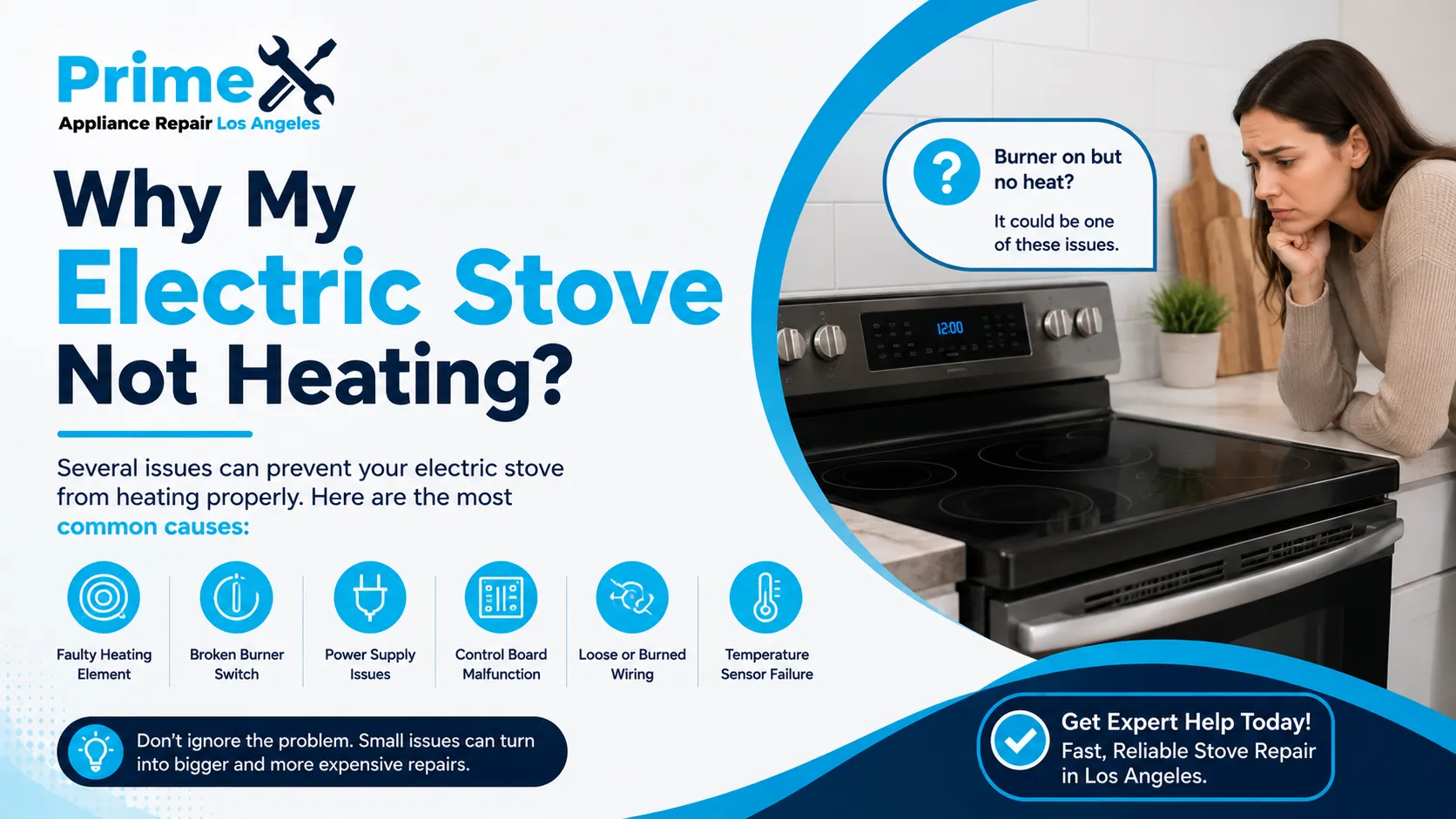
An electric stove may stop heating because the heating element is damaged, the burner connection is poor, a control switch has failed, or another electrical component is preventing power from reaching the element.
The exact possibilities depend on the stove design. For example, a traditional coil-top stove uses different components from a modern smooth-top electric range. Newer appliances may also rely more heavily on electronic controls.
If only one burner has stopped working while the others operate normally, the problem may be isolated to that burner or its associated components. When the entire stove stops functioning, the issue may involve the appliance’s power supply or a component affecting the unit as a whole.
Homeowners can check whether the stove is receiving power and whether a household breaker has tripped. Repeated breaker trips, burning smells, visible electrical damage, or other potentially hazardous symptoms should not be treated as routine DIY projects.
When Do You Need Electric Stove Repair in Los Angeles?
You should consider electric stove repair in Los Angeles when the appliance repeatedly fails to heat properly, a burner cannot be controlled normally, the stove displays persistent errors, or basic troubleshooting does not resolve the issue.
Electric stoves combine high-heat components with electrical systems. Diagnosis may therefore require testing parts rather than relying only on visual inspection. Here is a practical overview:
Stove symptom | Possible area to inspect | Recommended response |
One burner does not heat | Element, connection, or switch | Schedule diagnosis if basic checks fail |
Burner heats inconsistently | Element or control components | Professional inspection |
Stove has no power | Power supply, breaker or internal electrical issue | Check household power, then arrange service |
Burner stays unusually hot | Control switch or related component | Stop using affected burner and seek service |
Display shows an error | Sensor, control or electronic system | Check manual and arrange diagnosis if persistent |
Breaker repeatedly trips | Electrical fault or appliance problem | Stop repeated resets and seek qualified help |
These are possible causes rather than a diagnosis. Different models can produce similar symptoms for different reasons.
Why Does an Electric Burner Heat Unevenly?
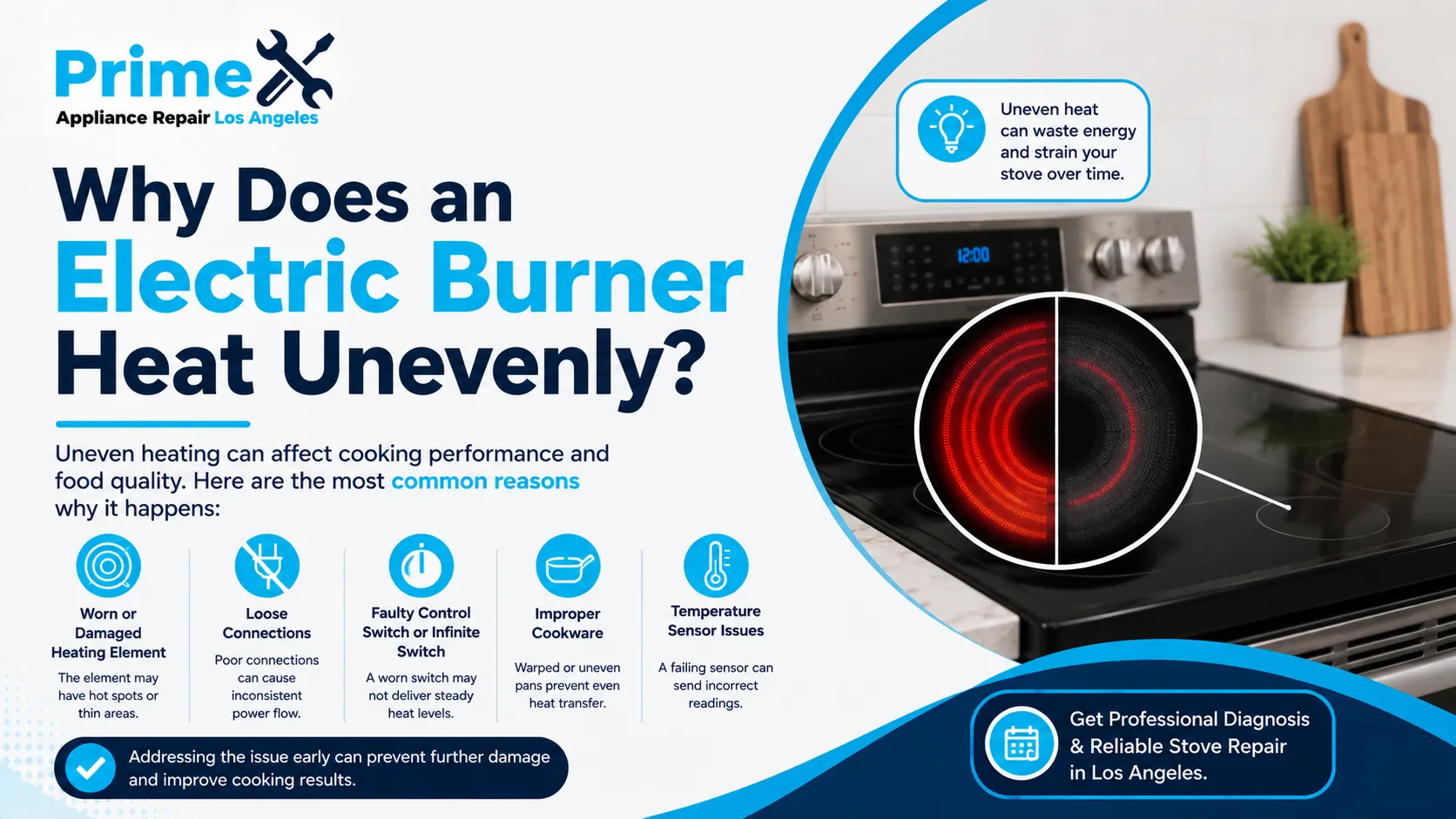
Uneven heating can happen when a heating element is damaged or deteriorating, its connection is poor, or the control system is not supplying power correctly.
Cookware can also create the impression of a stove problem. A warped pan, for instance, may not make even contact with a smooth cooking surface.
Before assuming the stove has failed, try appropriate flat-bottomed cookware and compare the performance of different burners. If one burner consistently behaves differently from the others, diagnosing the appliance becomes more reasonable.
Persistent uneven heating should not simply be ignored, particularly when the burner also shows visible damage or unusual temperature behavior.
What If the Stove Burner Will Not Turn Off?
A burner that continues heating after the control has been turned down or off deserves prompt attention. The problem can sometimes involve the burner control or another component responsible for regulating power. Continuing to use a stove that cannot reliably control heat is not advisable.
Turn off the affected burner and discontinue use if it continues heating unexpectedly. If necessary and safe to do so, disconnect power according to the appliance manufacturer’s instructions and arrange professional inspection. This is one situation where delaying repair for convenience may create unnecessary risk.
What Happens During Professional Stove Repair?
A professional repair appointment normally begins with the symptoms you have noticed. Providing clear information can make troubleshooting more efficient. Tell the technician when the problem began, whether it affects one burner or the entire stove, whether an error code appeared, and whether there were unusual sounds, smells, or electrical symptoms.
The technician can then inspect and test relevant components. The typical process involves:
- Confirming the reported stove problem.
- Inspecting the relevant components and connections.
- Performing diagnostic testing where appropriate.
- Identifying the likely failed component or system.
- Explaining the repair needed.
- Replacing or repairing components when appropriate.
- Testing stove operation after the repair.
A good repair process should focus on diagnosis first. Replacing parts without confirming the underlying problem can increase costs without necessarily fixing the appliance.
Can a Stove Be Repaired Instead of Replaced?
Often, yes. Many stove problems can be repaired when the appliance is otherwise in reasonable condition and replacement parts are available. However, repair is not automatically the best decision for every stove.
The appliance’s age, overall condition, previous repair history, part availability, type of failure, and estimated repair cost should all be considered.
A relatively straightforward component failure on an otherwise dependable stove may be worth repairing. An older appliance with several failing systems and difficult-to-find parts may make replacement more practical.
Rather than deciding solely on age, compare the condition and expected remaining usefulness of the appliance with the cost and complexity of the proposed repair.
Is DIY Stove Repair a Good Idea?
Basic troubleshooting is reasonable. Complex electrical repairs generally are not appropriate for an inexperienced homeowner.
You can check simple things such as the appliance settings, power availability, household circuit breaker, and whether removable components are properly positioned according to the manufacturer’s instructions.
Opening electrical assemblies, bypassing safety systems, working on energized components, or replacing parts without confirming the failure introduces unnecessary risk. Electric cooking appliances can operate on high-voltage circuits. If you are uncertain about the problem, professional diagnosis is the safer approach.
Samsung Stove Repair in Los Angeles: What Should Owners Know?
Modern Samsung stoves and ranges can combine conventional heating components with digital controls, sensors, touch interfaces, and electronic control systems. This means a problem that appears to be a simple burner failure can sometimes involve another part of the appliance.
Homeowners looking for Samsung stove repair in Los Angeles may need service for problems such as burners that do not heat correctly, controls that do not respond, error messages, temperature irregularities, or an appliance that fails to power on normally.
The specific design varies by Samsung model, so model-specific diagnosis is important. Before arranging service, locate the model information for your appliance when possible. Providing the model number can help the repair provider understand the stove configuration and determine what may be needed for the appointment.
What Should You Do When a Samsung Stove Shows an Error Code?
Start by recording the exact error code instead of repeatedly clearing it. An error code is useful diagnostic information. Depending on the model, it may indicate an issue associated with a sensor, control, communication system, or another component.
Consult the appliance’s official user documentation for the meaning of the code. If the code returns after recommended basic troubleshooting, professional diagnosis may be appropriate. Avoid assuming that an error code automatically means an expensive control board needs replacement. A technician should evaluate the underlying cause before parts are ordered.
How Do You Know When Stove Repair Should Not Wait?
Not every minor performance issue is an emergency, but certain symptoms deserve faster attention.
Stop using the affected stove or burner and seek qualified assistance if you notice persistent burning odors, visible sparking, smoke, controls that cannot regulate heat, repeated circuit-breaker trips, damaged electrical components, or other signs that suggest unsafe operation.
Do not repeatedly reset a breaker to force an appliance to continue operating. Safety should take priority over completing a meal or delaying a service appointment.
How Can You Prepare for a Stove Repair Appointment?
A little preparation can help the technician understand the problem faster. Before your appointment, note the stove brand and model number when available, describe exactly what the appliance is doing, write down any error codes, and remember approximately when the problem began.
Also clear cookware and unnecessary objects from the stove and surrounding work area. If the issue happens intermittently, describing the circumstances can be particularly useful.
For example, tell the technician whether the burner stops working after several minutes, whether the issue appears only at high heat, or whether the appliance loses power when multiple burners are used. These details can be more helpful than simply saying, “The stove doesn’t work.”
Why Is Accurate Diagnosis Important?
Accurate diagnosis helps prevent unnecessary part replacement and repeat service problems. Several stove components can produce similar symptoms. A burner that does not heat, for example, could involve the heating element itself, its connection, the burner control, wiring, or another part of the circuit.
Replacing the element simply because it is the most visible component may not solve the actual problem. An experienced technician should evaluate the symptom, inspect the relevant systems, and use appropriate testing to narrow down the cause. That diagnostic approach is particularly important with modern electronically controlled appliances.
What Factors Affect Stove Repair Cost in Los Angeles?
There is no single repair price that applies to every stove problem. Repair costs can vary according to the stove type, brand, model, failed component, required replacement parts, diagnostic complexity, labor involved, and availability of compatible parts.
A basic component replacement may be less involved than diagnosing an intermittent electrical or electronic-control issue. Premium and newer appliances may also contain specialized components that cost more than standard parts.
For that reason, be cautious about websites that promise an exact repair cost without knowing the appliance model or problem. An estimate becomes more meaningful after the issue has been properly diagnosed.
How Do You Choose a Stove Repair Service in Los Angeles?
Look beyond the lowest advertised price. A dependable appliance repair provider should communicate clearly, diagnose before recommending unnecessary parts, explain the proposed repair, and have experience with the type and brand of appliance being serviced.
It is also helpful to provide your appliance’s brand, model, symptoms, and error codes when requesting service.
For Los Angeles homeowners dealing with stove problems, Prime Appliance Repair LA provides appliance repair services focused on identifying the problem and helping customers determine an appropriate repair solution.
Why Choose Prime Appliance Repair LA for Stove Service?
When your kitchen depends on a working stove, you need more than a quick guess about what might be wrong. Proper diagnosis helps determine whether the issue involves a heating component, switch, connection, control system, or another part of the appliance.
Prime Appliance Repair LA serves customers looking for professional stove repair in Los Angeles, including electric stove and major-brand appliance problems.
The goal is straightforward: identify the problem, explain the repair requirements clearly, and help restore normal appliance operation when repair is a practical option.
If your stove has stopped heating, a burner is malfunctioning, or your appliance is displaying persistent errors, scheduling an inspection can help you get a clearer answer about what needs to be repaired.
How Can You Reduce Future Stove Problems?
Good everyday habits cannot prevent every component failure, but they can help keep a stove in better condition. Keep the cooking surface reasonably clean, address spills according to the manufacturer’s cleaning instructions, avoid allowing food debris to build up around removable components, and use cookware suitable for your cooktop.
Do not ignore changes in performance. A burner that occasionally fails to heat, a loose control, or repeated electrical symptoms can be easier to investigate before the appliance stops working completely. Always follow the care and maintenance guidance provided for your specific stove model.