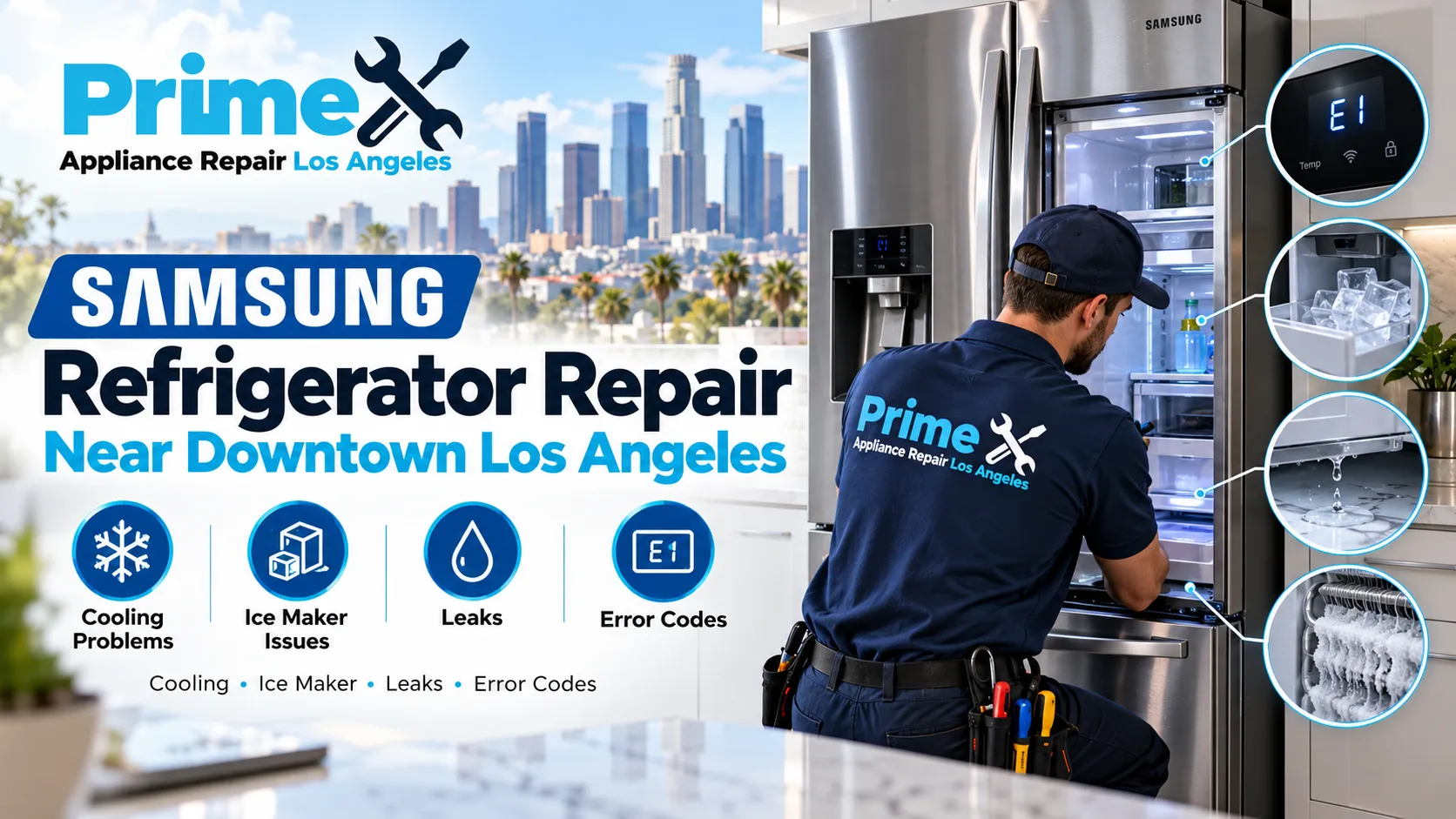
Why Is My Refrigerator Ice Maker Not Working?
Quick Answer: Why Is My Ice Maker Not Working?
An ice maker usually stops working because it isn’t getting enough water, the freezer is too warm, the ice maker is switched off, or a mechanical or electrical component can’t complete an ice-making cycle. Common causes include:
- Freezer temperature is too high
- Refrigerator water filter is clogged
- Water supply valve is closed or partly closed
- Water line is kinked or frozen
- Ice maker switch or control is off
- Ice cubes are blocking the ejector mechanism
- Fill tube is frozen
- Water inlet valve has failed
- Door switch is not detecting a closed door
- Ice maker motor, sensor, or control module has developed a fault
GE recommends a freezer setting of about 0°F and notes that its refrigerator ice makers generally need to become much colder than normal refrigerator temperatures before beginning an ice-making cycle.
How Does a Refrigerator Ice Maker Work?
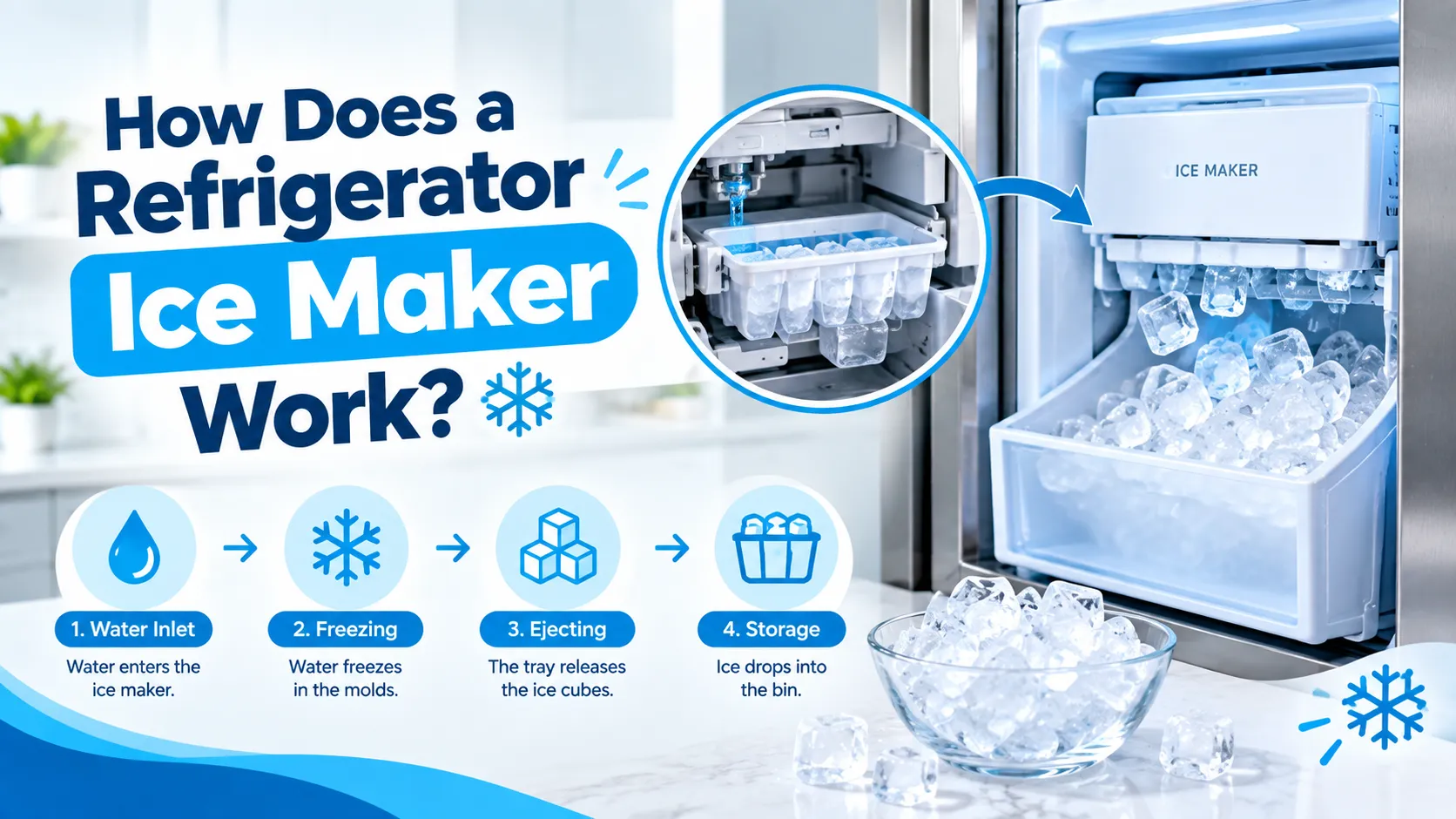
Understanding the basic process makes troubleshooting much easier. A refrigerator ice maker normally follows four stages:
- Water enters the ice mold.
- The freezer freezes the water into cubes.
- A motor or ejector mechanism pushes the cubes out.
- The ice maker requests another supply of water.
Sensors and switches control when each step happens. If the refrigerator does not receive water, the mold stays empty. If the freezer is too warm, the water may not freeze correctly. If the ejector cannot move, the next cycle may never begin. That is why an ice maker not working does not always mean the complete ice maker needs replacement.
What Are the Most Common Reasons an Ice Maker Stops Making Ice?
Several problems can cause the same symptom. Checking them in the right order can prevent unnecessary repairs.
Possible problem | What you may notice | What to check first |
Ice maker switched off | No ice production at all | Ice maker switch or control panel |
Freezer too warm | Slow or no ice production | Freezer temperature |
Clogged water filter | Small cubes or slow ice production | Filter age and water flow |
Water supply issue | Ice tray remains empty | Shutoff valve and supply line |
Frozen fill tube | No water reaches ice mold | Fill tube near ice maker |
Ice jam | Ice maker stops cycling | Mold and ejector area |
Faulty inlet valve | Water dispenser may work differently | Water pressure and valve |
Door switch problem | Ice maker stops when door appears open | Door closure and switch |
Ice maker failure | Water and temperature appear normal | Motor, sensor, module, wiring |
Start with the simple checks before removing parts or ordering replacements.
Is the Freezer Cold Enough to Make Ice?
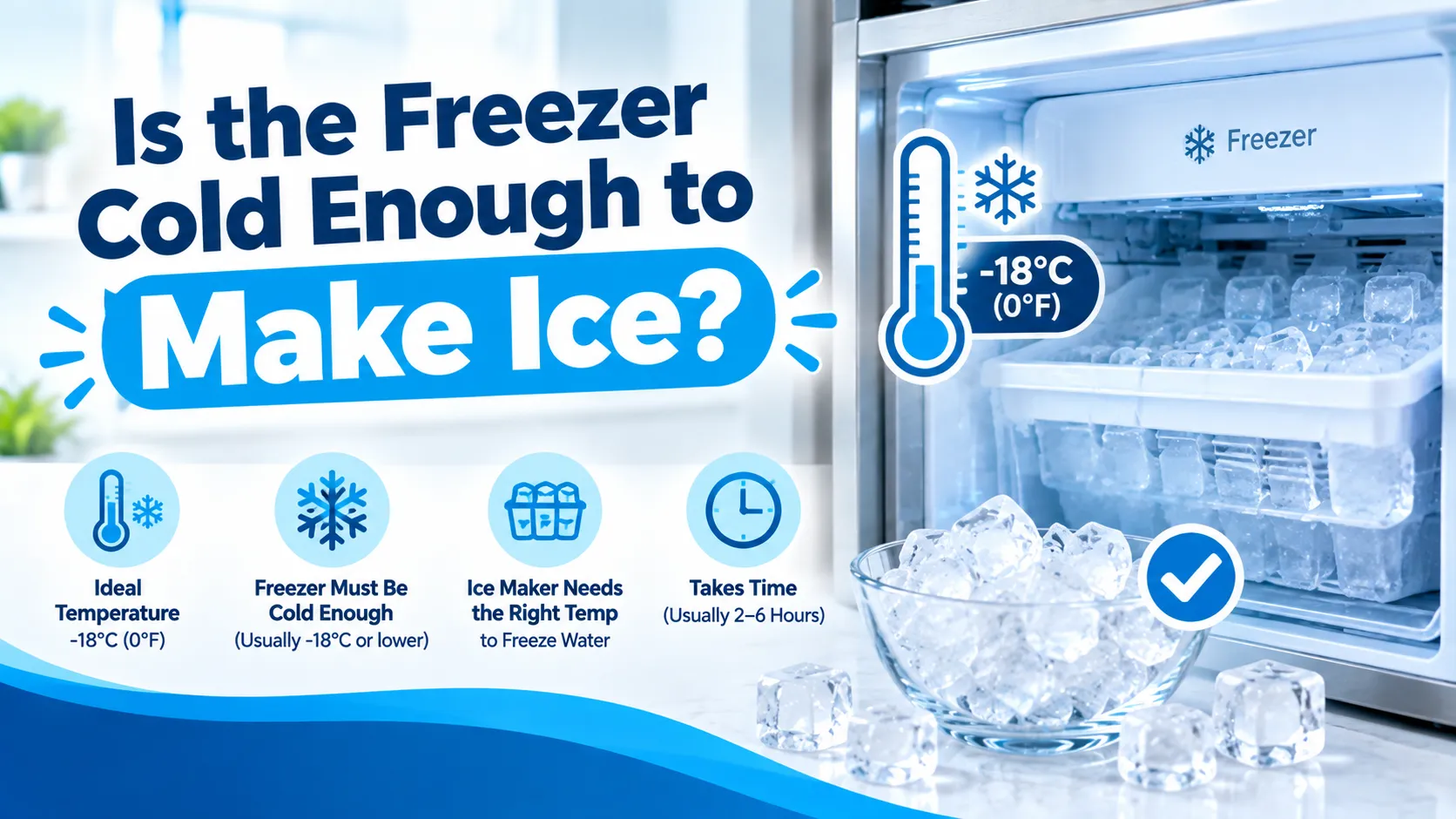
Temperature is one of the first things to check when a refrigerator is cooling, but the ice maker is not producing ice. A good target freezer setting is 0°F (-18°C).
GE recommends approximately 0°F for the freezer and 37°F for the fresh-food section. GE also notes that its ice maker must reach a much lower temperature before an ice-making cycle can begin.
If your freezer temperature has risen, possible causes include: A door that was left open, damaged door seals, blocked air vents, heavy recent grocery loading, a cooling-system problem, or frequent door opening.
Do not keep lowering the temperature control if the freezer is already near 0°F. If the actual temperature remains too warm despite the correct setting, the refrigerator itself may need diagnosis.
Could a Clogged Water Filter Stop the Ice Maker?
Yes. A restricted refrigerator water filter can reduce the amount of water reaching the ice maker. This may cause:
- Very small ice cubes
- Hollow cubes
- Slow ice production
- No ice production
- Weak water dispenser flow
GE recommends replacing many refrigerator water filters about every six months, although the exact interval depends on the refrigerator and local water conditions. Whirlpool also advises checking that a recently installed filter is properly seated because incorrect installation can restrict or stop water flow. Always use a filter compatible with your refrigerator model.
Why Water Quality Matters in Los Angeles
Water hardness varies significantly across Los Angeles. LADWP’s published figures show average hardness levels above 7 grains per gallon in several Los Angeles service areas, which the department categorizes as hard water.
Hard water does not automatically damage an ice maker. However, dissolved minerals can leave scale on water-contact components over time. Regular filter replacement and proper cleaning can therefore be useful parts of refrigerator maintenance in Los Angeles homes.
How Do You Check the Refrigerator Water Supply?
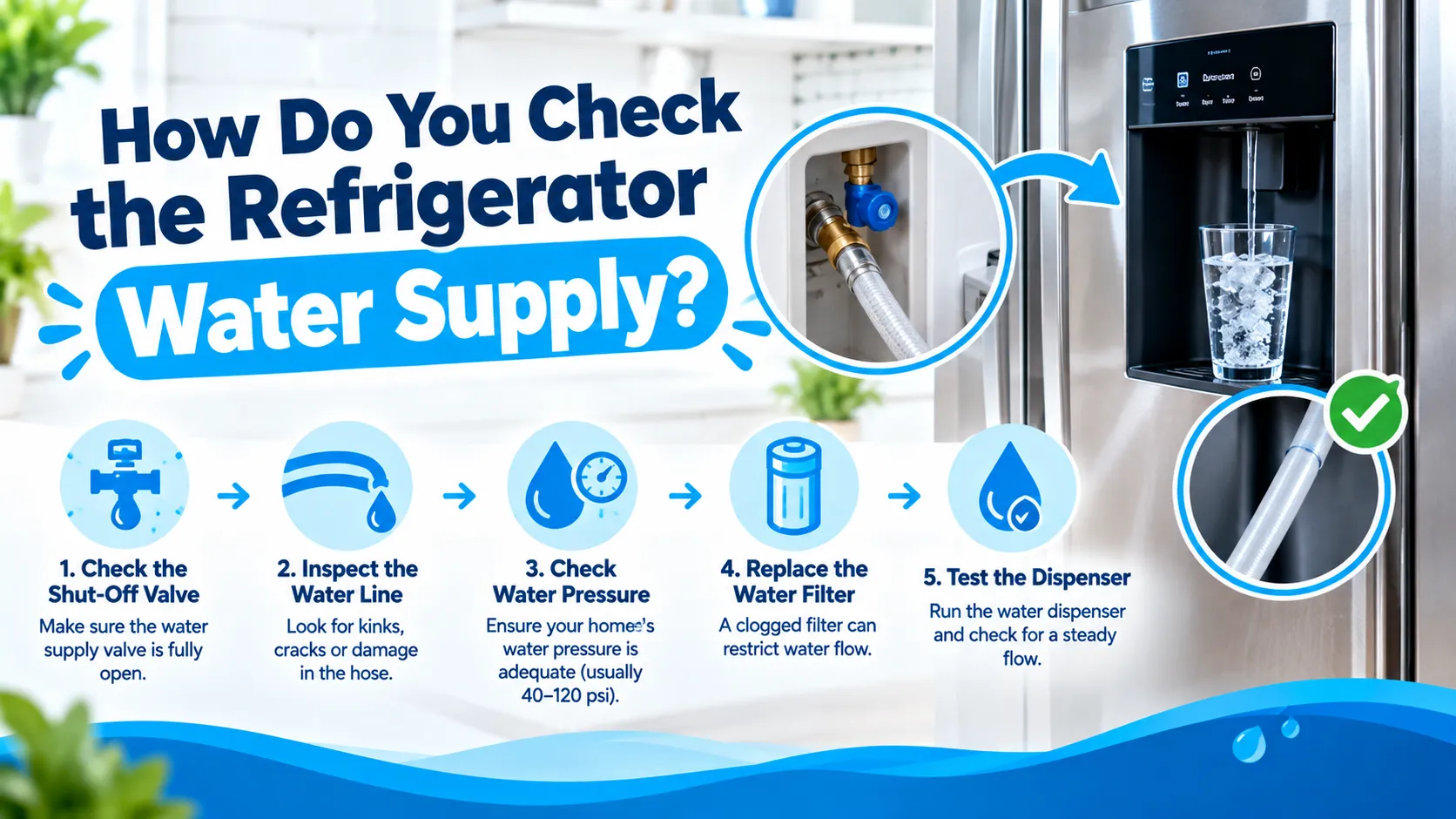
If the ice maker is cold but the tray stays empty, check whether water can reach it. Find the refrigerator’s water shutoff valve, usually behind the refrigerator, beneath the sink, or near another plumbing connection. Make sure the valve is completely open. Then inspect the supply tubing for:
- Sharp bends
- Kinks
- Crushing behind the refrigerator
- Visible leaks
- Frozen sections
- Loose fittings
Be careful when moving the refrigerator. Water tubing and electrical cords can be damaged if the appliance is pulled forward too aggressively.
If you recently moved or installed the refrigerator, trapped air in the water line may also temporarily affect ice production. GE notes that newly installed systems may require several cycles to purge air before filling normally.
Why Is My Ice Maker Not Making Ice but the Water Dispenser Works?
This is a common situation. If the refrigerator dispenses water normally but does not make ice, the main household water supply is probably reaching the refrigerator. The problem may instead be inside the ice-making system.
Possible causes include an ice maker fill tube, faulty ice maker valve circuit, ice maker control problem, blocked mold, temperature issue, or defective ice maker module.
Some refrigerators use different water valve circuits for the dispenser and ice maker. Therefore, a working dispenser does not prove that every part of the ice maker’s water system is functioning correctly. GE specifically notes that certain ice maker water-fill problems can occur even while the refrigerator water dispenser continues to work.
Could Ice Be Jammed Inside the Ice Maker?
Yes. A stuck cube can prevent the ejector mechanism from completing a cycle. Turn the ice maker off before inspecting the mold and visible ejector area. Look for cubes that are frozen together or preventing movement.
GE advises checking for cubes obstructing the rake or ejector because a jam can prevent the ice maker from completing its normal cycle. Do not force the ejector mechanism with a screwdriver or other metal object. Doing so can damage plastic parts, heating elements, or electrical components.
What Is a Frozen Ice Maker Fill Tube?
The fill tube carries water into the ice maker. If water freezes inside the tube, the ice maker may continue trying to operate, but no water enters the mold. A frozen fill tube may be linked to:
- Low water pressure
- A leaking water inlet valve
- Freezer temperature problems
- Ice buildup
- Repeated small amounts of water entering the tube
If the tube repeatedly freezes after being cleared, simply removing the ice may not solve the underlying problem. A technician may need to check the water valve, pressure, or related components.
How Do You Reset an Ice Maker?
There is no single reset procedure that works for every refrigerator. Some ice makers have a reset or test button. Others use a control-panel sequence. Some are reset by turning the ice maker off and back on. Others require a refrigerator power cycle. Before resetting:
- Make sure the ice maker is switched on.
- Check that the freezer is cold.
- Confirm that water is available.
- Look for visible ice jams.
- Check your owner’s manual for model-specific instructions.
For certain Whirlpool models, Whirlpool recommends locating the reset control if the model has one. If no reset button is provided, Whirlpool states that unplugging the refrigerator for about one minute and reconnecting power may perform a basic power reset.
Do not repeatedly reset an ice maker without finding the cause of the problem. A reset may clear a temporary electronic error, but it will not repair a blocked water line or failed part.
How Do I Reset My GE Ice Maker?
GE reset instructions depend heavily on the ice maker design. For certain older GE ice makers with an On/Off switch and LED indicator, GE provides a diagnostic procedure that involves switching the ice maker off briefly, turning it back on, and operating its paddle three times within a specific period. The unit should then enter a harvest cycle.
That procedure does not apply to every GE refrigerator. Modern GE models may use electronic controls, test buttons, or model-specific diagnostic procedures. The safest approach is to locate the refrigerator’s model number and use the manufacturer’s instructions for that exact model.
Why Is My Whirlpool Ice Maker Not Working?
If your Whirlpool ice maker is not working, start with the same basic checks used for most refrigerator brands. Confirm that:
- The ice maker is turned on.
- The freezer is cold enough.
- The refrigerator receives water.
- The filter is installed correctly.
- The water line is not kinked.
- The ice bin is positioned properly.
Whirlpool states that incorrect water-filter installation can restrict water flow and affect ice production. The company also suggests a power cycle on models without a dedicated reset control when troubleshooting certain ice-maker problems.
If you have a Whirlpool refrigerator ice maker not working even though water pressure, temperature, and filter condition appear normal, the inlet valve, wiring, sensor, motor, or ice maker assembly may require further testing.
Why Is My Whirlpool In-Door Ice Maker Not Working?
A Whirlpool in-door ice maker not working can have additional causes because the ice-making compartment is usually located inside or near the refrigerator door. These systems depend on controlled cold airflow reaching the ice compartment.
Problems may include poor door sealing, blocked airflow, ice buildup, an incorrectly positioned ice bucket, temperature problems, or an electronic fault.
Check that the door closes fully and that packages inside the refrigerator are not preventing proper closure. If frost is building around the ice compartment, investigate the cause rather than repeatedly removing the frost.
Why Is My Portable Ice Maker Not Working?
A portable ice maker not working should be diagnosed differently from a refrigerator ice maker. Portable units commonly stop producing ice because the water reservoir is empty, the ice basket is incorrectly positioned, a sensor is blocked, the appliance needs cleaning, or the unit is in a cleaning or defrost cycle.
GE’s standalone ice-maker guidance recommends checking power, water availability, and control status. Some models can also be reset using their On/Off control.
For GE Opal models specifically, GE notes that cleaning, defrosting, an improperly seated ice bin, or low water can prevent ice production. Certain models may be reset by disconnecting power for a longer period according to their specific instructions. Always follow the manual for your portable unit because procedures vary significantly between models.
Why Would an Ice Maker Suddenly Stop Working?
An ice maker can suddenly stop because a filter becomes too restricted, the freezer temperature changes, a water valve fails, a fill tube freezes, an ice cube jams the mechanism, or an electrical component stops functioning.
Think about what changed recently. Did you replace the filter? Move the refrigerator? Experience a power outage? Notice weak dispenser flow? Leave the freezer door open? See frost developing? The timing can provide useful clues. If there was no obvious change and the basic checks are normal, a component may have failed.
How Do I Get My Ice Maker to Start Making Ice Again?
Use this troubleshooting order:
- Confirm that the ice maker is switched on.
- Check the freezer temperature.
- Make sure the refrigerator has water.
- Inspect the water line for kinks.
- Check or replace an overdue water filter.
- Look for ice blocking the mold or ejector.
- Verify that the ice bin is installed correctly.
- Perform the manufacturer-approved reset.
- Allow enough time for a complete ice-making cycle.
- Arrange professional diagnosis if ice production still does not begin.
After a new installation or major temperature change, do not expect a full ice bin immediately. GE states that a newly installed refrigerator ice maker may take up to about 24 hours just to become cold enough to begin producing ice.
When Should You Call an Appliance Repair Technician?
Some checks are simple. Others require electrical testing, water-system diagnosis, or refrigerator disassembly.
Professional service makes sense when the ice maker remains inactive despite correct temperature and water supply, or when you notice leaking, repeated freeze-ups, wiring problems, burning smells, unusual electrical behavior, or suspected control-board faults.
You may also need professional diagnosis if the water inlet valve must be tested or replaced. If water is leaking, turn off the refrigerator’s water supply until the cause has been identified. Water leaks can damage flooring, cabinets, and nearby walls.
Should You Repair or Replace the Ice Maker?
The answer depends on the failed component and the age of the refrigerator. A clogged filter, blocked tube, switch problem, or minor valve issue may be worth repairing.
Replacement becomes more reasonable when the ice maker assembly has multiple failed components or the refrigerator itself is already approaching the end of its useful life.
Do not replace the complete refrigerator simply because the ice maker stops producing ice. Get the problem diagnosed first. The ice maker may be a separate repairable component.
What Is the Average Lifespan of an Ice Maker?
There is no guaranteed lifespan because ice-maker durability depends on design, water quality, usage, maintenance, and refrigerator condition.
As a general industry estimate, refrigerator ice makers may begin requiring significant repair or replacement after roughly four to ten years, although some last longer.
Angi’s 2026 repair guidance estimates approximately four to five years under regular daily use, with properly maintained units potentially lasting closer to ten years. This should be treated as a general estimate rather than a fixed replacement schedule. The condition of the ice maker matters more than its age alone.
How Can You Help Prevent Future Ice Maker Problems?
A few routine habits can reduce common problems. Keep the freezer close to the manufacturer’s recommended temperature. Replace the refrigerator water filter according to the manual. Avoid pushing the refrigerator against the wall hard enough to kink its water line. Keep the ice bin correctly seated and clean accessible ice-making components as recommended by the manufacturer.
In areas with hard water, including many parts of Los Angeles, regular filter maintenance becomes especially useful because minerals can accumulate on water-contact surfaces over time. Do not ignore unusually small ice cubes or suddenly slower production. These can be early signs of restricted water flow.