
Why Is My Refrigerator Leaking Water on the Floor?
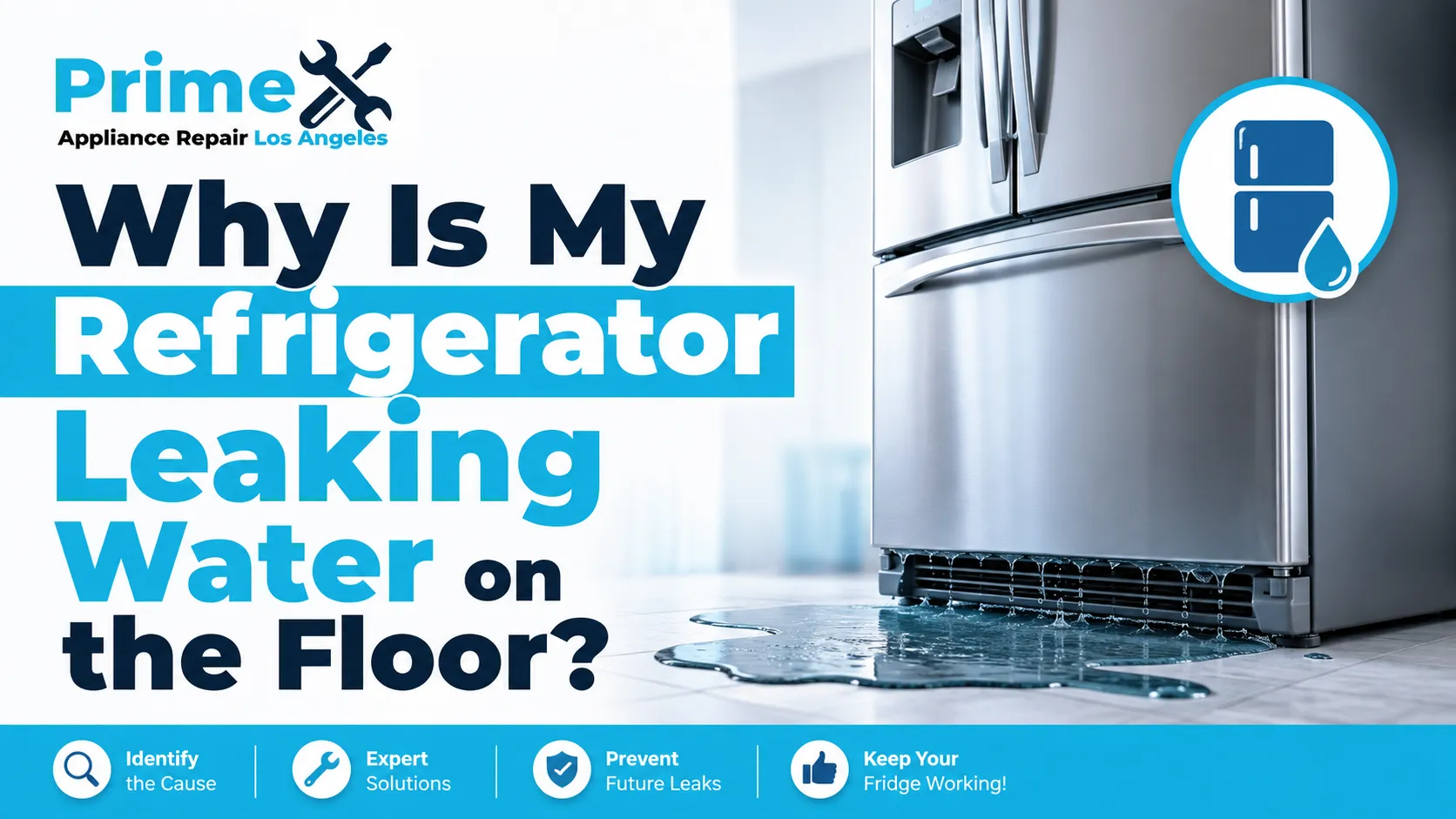
Why Is My Refrigerator Leaking Water on the Floor?
The most common reason a refrigerator leaks water onto the floor is that water produced during normal defrosting is not draining correctly. A clogged defrost drain can cause water to collect inside the refrigerator or freezer and eventually escape onto the floor. Other common causes include:
- A clogged or frozen defrost drain
- A cracked or overflowing drain pan
- A loose water supply connection
- A damaged or incorrectly installed water filter
- A leaking dispenser or ice maker water line
- A refrigerator that is not properly leveled
- A door that does not seal correctly
- Excess frost or condensation
- A damaged water inlet valve
Manufacturers including Whirlpool, Samsung, and Frigidaire identify drainage, water connections, filters, leveling, and condensation as common areas to investigate when a refrigerator leaks.
What Causes a Refrigerator to Leak Water?
Understanding where the water originates is usually more useful than immediately replacing a part. Start by looking at where the puddle appears.
Where you see the water | Likely cause | What to check |
Under the refrigerator | Drain pan, clogged drain, water line | Pan, drain system, and rear connections |
Inside below crisper drawers | Blocked defrost drain | Drain opening and ice buildup |
Inside the freezer | Frozen or blocked drain | Frost and drain area |
Near the dispenser | Filter, dispenser, or water line | Filter seating and dispenser nozzle |
Behind the refrigerator | Supply line or inlet valve | Tubing and connections |
Around the front bottom | Drainage or leveling problem | Appliance position and drain system |
Only after using the dispenser | Air, filter, or dispenser issue | Filter and water line |
This does not mean every leak follows the same pattern. Water can travel beneath cabinets and insulation before appearing elsewhere, so the visible puddle is not always directly below the failed component.
Is a Fridge Leaking Water Dangerous?
A small refrigerator leak is not necessarily an emergency, but it should not be ignored. Water on the floor can create a slip hazard and may damage flooring or nearby cabinets if the leak continues. More importantly, water around electrical components can create a safety concern.
If water is reaching electrical connections, the outlet, power cord, or other electrical components, avoid touching wet electrical areas. If it is safe to do so, disconnect power according to the manufacturer’s instructions and keep people away from the wet area.
A refrigerator that is leaking heavily, leaking continuously, making unusual electrical noises, or experiencing cooling problems deserves prompt professional attention.
Why Is My Fridge Leaking Water Inside the Top Shelf?
Water appearing near the top shelf is different from a typical puddle underneath the refrigerator. Possible causes include condensation, a blocked internal drain, a water dispenser problem, or water coming from an upper water line or component.
If you have a refrigerator with a water dispenser or ice maker, inspect the area around the water filter and internal water connections. A cracked, loose, or improperly installed filter can allow water to enter the refrigerator compartment.
Frigidaire specifically recommends checking whether a recently replaced filter is correctly installed and whether the filter itself is cracked when water is leaking inside the refrigerator.
Also check whether food containers are blocking air vents or whether the refrigerator door is closing completely. Warm air entering through a poorly sealed door can increase condensation and contribute to water buildup.
Why Is My Refrigerator Leaking Water From the Water Dispenser?
If water is dripping from the dispenser after you fill a glass, the cause may be relatively simple. A small amount of residual dripping can occur, but continuous dripping should be investigated. Possible causes include:
Air in the water line
If the refrigerator was recently installed or the water filter was replaced, air can become trapped in the water system. Samsung recommends dispensing water until the line is properly purged when air is suspected.
Incorrectly installed water filter
A filter that is not seated correctly may allow water to escape around the filter housing. Remove and reinstall the filter according to the refrigerator’s manual. If the filter is cracked or damaged, it may need replacement.
Water-line or coupler problem
A loose or damaged water connection can cause continuous dripping. Samsung notes that water-line couplers can be particularly relevant when a dispenser leak begins after installation, relocation, or door removal.
Water pressure problem
Water pressure can also affect dispenser performance. Samsung advises checking water pressure when dispenser dripping continues after other basic checks.
How to Fix a Fridge Leaking Water on the Floor
Before attempting any repair, identify the source of the water and consult the owner’s manual for your exact model.
1. Clean up the water first
Dry the floor completely. This makes it easier to determine whether new water is appearing and reduces the risk of slipping.
2. Check whether the leak is coming from the refrigerator
Sometimes the water is not actually coming from the refrigerator. Check nearby:
- Water supply valves
- Ice maker connections
- Water dispenser area
- Kitchen sink plumbing
- Dishwasher connections
- Nearby appliances
A slow plumbing leak can sometimes appear to be a refrigerator problem.
3. Inspect the defrost drain
The defrost system periodically melts frost from the evaporator. That water normally travels through a drain into a pan where it can evaporate. If the drain becomes blocked by ice, food particles, or debris, water can back up inside the refrigerator or freezer and eventually reach the floor.
A blocked defrost drain is one of the most common explanations for water accumulating inside the refrigerator and then leaking underneath it. Do not use sharp objects to break ice inside the drain. You could damage the drain tube or nearby components.
4. Check the water filter
If your refrigerator has filtered water or an ice maker, inspect the filter. Look for:
- A filter that is not fully seated
- Cracks or visible damage
- Water around the filter housing
- A filter that was recently replaced
- A filter that does not match the manufacturer’s specifications
A recently installed filter is an especially useful clue because incorrect installation can immediately create a leak.
5. Inspect the water supply line
Look behind the refrigerator for signs of moisture around the water tubing and connections. If you find a damaged or split water line, shut off the water supply before attempting further inspection. Do not pull or bend the tubing aggressively. Whirlpool recommends closing the water shut-off valve before inspecting refrigerator water lines and connections.
6. Check the refrigerator’s leveling
A refrigerator should be installed according to the manufacturer’s leveling requirements. An improperly positioned appliance can interfere with drainage and door operation.
Samsung notes that many refrigerators are designed to sit with a slight backward tilt rather than being perfectly level front-to-back. Use your owner’s manual when adjusting the leveling feet or rollers because the correct procedure varies by model.
7. Check the door seal
A refrigerator door that does not close properly can allow warm, humid air to enter. That can increase condensation and frost formation. Eventually, melting frost or excess moisture may contribute to water leakage. Check whether:
- Food is preventing the door from closing
- The gasket is dirty
- The gasket is torn or damaged
- The door is misaligned
- The refrigerator is overloaded
Clean the gasket gently and make sure nothing is obstructing the door.
Why Is My New Fridge Leaking Water From the Bottom?
A new refrigerator leaking water from the bottom can be especially concerning, but installation-related problems are worth checking first. Possible causes include an improperly connected water line, an incorrectly installed filter, a drain or drain-pan issue, or improper leveling.
If the refrigerator was installed recently, check the installation connections rather than immediately assuming the appliance itself is defective. Frigidaire advises customers with units installed within the previous 30 days to refer back to the installer when troubleshooting unresolved water leaks.
For a newly installed refrigerator, warranty and installation requirements may also affect who should perform the repair. Avoid disassembling components unnecessarily while the appliance is under warranty.
Whirlpool Refrigerator Leaking Water: What Should You Check?
If you have a Whirlpool refrigerator leaking water, start with the same basic troubleshooting process used for most modern refrigerators. Whirlpool identifies blocked drains, improper installation, water-line issues, filter installation, and leveling among potential causes of refrigerator leaks. Start by checking:
- The defrost drain
- The water filter
- Water supply connections
- Drain pan
- Refrigerator leveling
- Door sealing
Whirlpool also recommends consulting the specific owner’s manual because refrigerator designs and troubleshooting procedures vary between models.
Frigidaire Refrigerator Leaking Water: Common Causes
For a Frigidaire refrigerator leaking water, the manufacturer’s troubleshooting guidance focuses on several specific areas. If water is appearing outside the refrigerator, inspect the water connections and rear water valve for moisture or loose connections.
If water is appearing inside, check the water filter and look for cracks or incorrect installation. Frigidaire also notes that leaving the door open for an extended period can contribute to evaporator icing and subsequent water leakage.
For water leaking from the dispenser, check for ice around the dispenser chute and consider whether air may be present in the water line.
Why Is My Samsung Refrigerator Leaking Water From Underneath?
If you have a Samsung refrigerator leaking water from underneath, the first step is to determine whether the water is actually coming from underneath or has traveled there from inside the appliance. Samsung recommends checking the refrigerator’s leveling, drainage system, water filter, and water connections when leaks occur.
A clogged drain can cause water to accumulate inside and eventually escape underneath the refrigerator. A damaged filter or water-line connection can produce a more direct leak. For Samsung models with water dispensers or automatic-fill features, those systems should also be inspected if the leak appears near the front or dispenser area.
When Should You Call a Refrigerator Repair Professional?
Some refrigerator leaks are suitable for basic homeowner troubleshooting, but not every problem should be repaired without professional experience. Call a qualified appliance technician if:
- The refrigerator continues leaking after basic checks.
- Water is coming from an internal component you cannot safely access.
- The water inlet valve appears damaged.
- A water line is cracked or difficult to replace.
- Heavy ice buildup repeatedly returns.
- The refrigerator is no longer cooling properly.
- You suspect an electrical problem.
- The drain remains blocked after safe cleaning.
- The appliance is under warranty and requires component repair.
A technician can test the refrigerator’s drainage system, water inlet valve, supply lines, drain pan, defrost system, and other components rather than replacing parts based only on guesswork.
How Can You Prevent Refrigerator Water Leaks?
Regular maintenance can reduce the likelihood of recurring leaks. Keep the refrigerator’s door seals clean, avoid blocking internal air vents, replace water filters according to the manufacturer’s recommendations, and periodically inspect accessible water connections.
It is also important not to overload the refrigerator or block the drain area with food containers. For Samsung refrigerators, manufacturer guidance specifically recommends maintaining airflow, checking drainage, ensuring correct leveling, and keeping food placement from interfering with circulation.
Quick Checklist for a Leaking Refrigerator
If you discover water on the floor, work through these checks in order:
- Dry the floor and confirm that new water is appearing.
- Determine whether the water is coming from inside, underneath, behind, or the dispenser.
- Check the defrost drain for blockage or ice.
- Inspect the water filter and filter housing.
- Check accessible water-line connections.
- Make sure the refrigerator doors close completely.
- Check whether the appliance is positioned correctly.
- Inspect the drain pan if it is accessible according to the owner’s manual.
- If the leak continues, arrange professional inspection.
Is a Refrigerator Water Leak an Expensive Repair?
Not necessarily. The cost depends heavily on the cause. A simple filter replacement or minor drainage issue may be relatively inexpensive, while a damaged water valve, internal drain problem, electronic component, or difficult-to-access leak can require more labor and replacement parts.
For homeowners in Los Angeles, the best approach is to identify the source before approving a repair. A reputable technician should explain the suspected failure, the required repair, and the expected cost before performing significant work.
Avoid replacing expensive components simply because water is appearing on the floor. The same symptom can be caused by several different problems.