
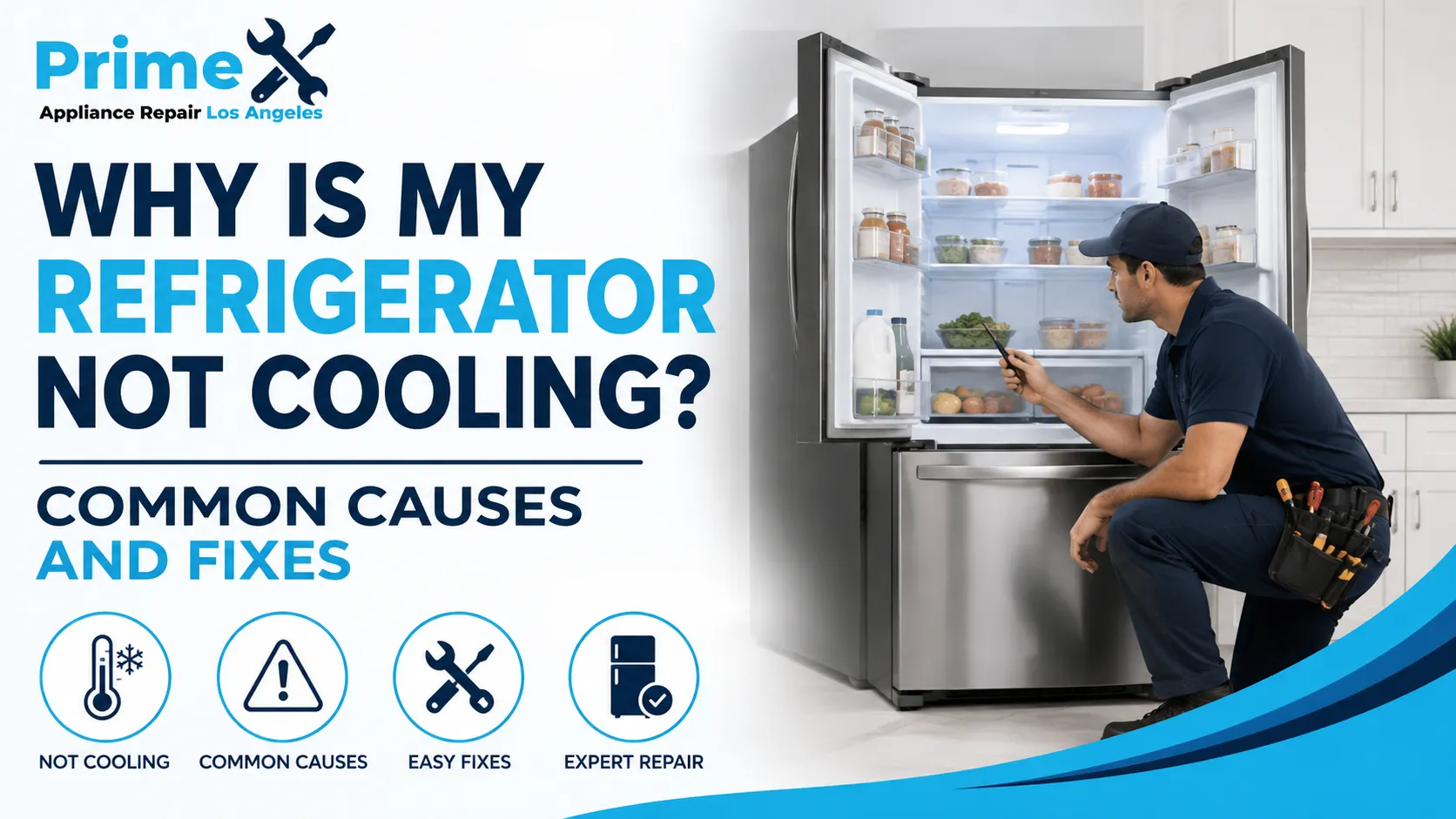
Why Is My Refrigerator Not Cooling? Common Causes and Fixes

Jump To

This is a title

Refrigerator Not Cooling

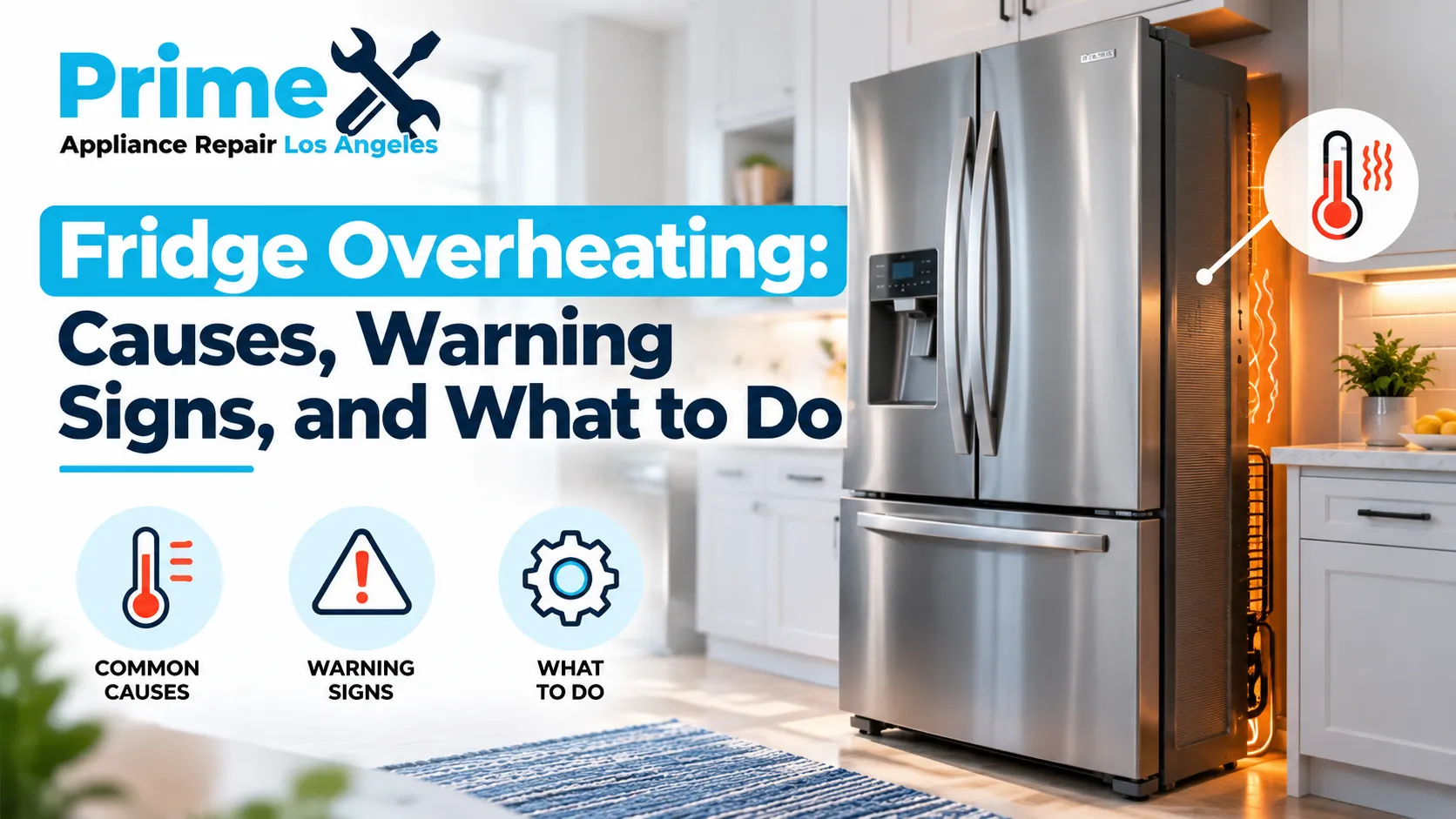
A refrigerator not cooling can quickly put your food at risk. Common causes include incorrect temperature settings, blocked airflow, dirty condenser coils, damaged door seals, or problems with the fan, defrost system, or compressor.

Start by checking the temperature settings, doors, air vents, and condenser area. If your refrigerator still isn’t cooling properly, professional diagnosis may be needed. For homeowners in Los Angeles, California, Prime Appliance Repair LA can help diagnose and repair refrigerator cooling problems.

What Is the First Thing to Check When a Refrigerator Stops Cooling?

The first thing to check is whether the refrigerator is actually receiving power and whether its temperature controls are set correctly.

If the interior light turns on when you open the door, the appliance is receiving at least some electrical power. However, that does not necessarily mean the cooling system is operating properly. Before doing anything complicated, check these basics:

  • Confirm that the refrigerator plug is firmly connected to the outlet.
  • Make sure the temperature control was not accidentally changed.
  • Check whether the refrigerator is in Demo, Showroom, or Cooling Off mode.
  • Make sure food packages are not blocking internal air vents.
  • Confirm that both refrigerator and freezer doors close completely.
  • Listen for the compressor and fans operating.
  • Check for excessive frost or ice inside the freezer.
  • Inspect the condenser area for heavy dust and debris.

A refrigerator compartment is generally designed to remain at about 40°F (4°C) or below, while a freezer should typically be around 0°F (-18°C). An appliance thermometer can help you determine whether the unit is actually maintaining a safe temperature.

Why Is My Fridge Not Cooling but the Lights Are On?

Why Is My Fridge Not Cooling but the Lights Are On

If the lights work but the refrigerator is warm, the appliance has electrical power, but something may be preventing the refrigeration system from removing and circulating heat. This situation commonly points to an airflow, fan, control, defrost, or compressor-related problem.

The Temperature Setting May Be Wrong

Temperature settings can sometimes be changed accidentally while cleaning the refrigerator or moving food.

Check the control panel and allow sufficient time after changing the setting. A refrigerator does not become cold immediately after an adjustment, particularly if it has recently been unplugged, installed, or filled with room-temperature groceries.

Some modern refrigerators also have special modes that disable cooling while keeping lights and displays operational. Check your owner’s manual if the control panel indicates Demo, Showroom, or Cooling Off mode.

The Air Vents May Be Blocked

Cold air needs space to circulate throughout the refrigerator. Packing containers directly against internal vents can restrict that airflow. As a result, one section may become noticeably warmer even though the cooling system is running.

Rearrange food so that there is reasonable clearance around the vents. Avoid overfilling the refrigerator, particularly around the back wall and air outlets.

Common Reasons a Refrigerator Is Not Cooling

Common Reasons a Refrigerator Is Not Cooling

Several components work together to maintain the correct temperature. A problem with any part of the cooling or airflow system can produce similar symptoms.

Possible causeCommon signsWhat you can checkMay professional repair be needed?
Incorrect temperature settingRefrigerator feels warmer than usualCheck control settingsUsually no
Blocked air ventsUneven coolingRearrange foodUsually no
Dirty condenser coilsPoor cooling, longer run timesInspect accessible coilsSometimes
Door seal problemMoisture or warm air enteringInspect gasket and door closureSometimes
Evaporator fan issueFreezer may be cold but fridge warmListen for fan operationOften
Condenser fan problemPoor cooling near compressor areaCheck for obstruction if safely accessibleOften
Defrost system problemHeavy frost on freezer panelLook for abnormal ice buildupOften
Start relay problemClicking without normal compressor operationListen for repeated clickingYes
Temperature sensor/control issueErratic temperatureObserve temperature behaviorUsually
Compressor/sealed-system issueLittle or no coolingRequires diagnosisYes


The symptoms provide clues, but several failures can look alike. Component testing is usually more reliable than replacing parts based on symptoms alone.

Why Is the Fridge Not Cold but the Freezer Is?

Why Is the Fridge Not Cold but the Freezer Is

If the freezer is cold but the refrigerator is not, airflow between the two compartments is one of the first things to investigate.

In many refrigerator designs, cold air is produced around the freezer’s evaporator and circulated into the fresh-food compartment. If that air cannot reach the refrigerator section, the freezer may continue to feel cold while the refrigerator becomes warm.

Blocked Refrigerator Air Vents

Food containers can obstruct supply or return vents. Moving food away from these openings may restore proper circulation if blockage is the only problem.

Evaporator Fan Problems

The evaporator fan helps move cold air through the appliance. If it stops operating correctly, temperatures can become uneven.

You might notice that the freezer remains cold while there is little or no cold airflow entering the refrigerator compartment. Fan diagnosis may require removing panels, so this is generally better handled by a qualified technician.

Excessive Frost Around the Evaporator

A malfunctioning automatic defrost system can allow frost to accumulate around the evaporator coils. Eventually, that ice restricts airflow. A heavily frosted freezer back panel is an important clue.

Defrost problems may involve a heater, temperature sensor, control board, or related component depending on the refrigerator design.

Can Dirty Condenser Coils Cause a Refrigerator Not to Cool?

Yes. Excessive dirt on accessible condenser coils can reduce the refrigerator’s ability to release heat. The condenser is part of the system that transfers heat removed from inside the refrigerator to the surrounding room. Dust, pet hair, and debris can interfere with heat transfer on models with exposed coils.

If your model has accessible coils, follow the manufacturer’s cleaning instructions. Always unplug the refrigerator before performing maintenance that requires working around electrical or moving components.

Not every modern refrigerator has user-accessible condenser coils, so avoid dismantling panels unless the manufacturer specifically identifies them as serviceable by the owner.

Can a Bad Door Seal Make a Refrigerator Warm?

Yes. A damaged, dirty, loose, or poorly aligned door gasket can allow warm room air to continuously enter the refrigerator. Signs of a sealing problem may include condensation, frost, unusually long run times, or a door that does not sit evenly. Inspect the gasket for:

  • Cracks or torn sections
  • Food residue
  • Warped areas
  • Loose sections
  • Objects preventing the door from closing
  • Shelves or containers interfering with the door

Clean a dirty gasket according to the appliance manufacturer’s recommendations. Also check whether the refrigerator is reasonably level. Improper positioning can sometimes affect how well a door closes.

Why Is My Fridge Not Cooling and Making Noise?

A refrigerator that is not cooling and making noise may have a fan, compressor-start, ice, or mechanical problem. The type and location of the sound matter.

A light hum, airflow noise, occasional clicking, or refrigerant-related sounds can be normal. Newer refrigerators may produce sounds that older models did not. More concerning symptoms include repeated clicking combined with no cooling, unusually loud buzzing, scraping from a fan area, or a fan repeatedly hitting accumulated ice.

For example, a scraping sound from the freezer could occur when ice interferes with an evaporator fan blade. Repeated clicking near the compressor area may indicate difficulty starting, although proper testing is needed before identifying the failed component.

If the appliance is getting unusually hot, producing a burning smell, repeatedly tripping a breaker, or making severe electrical noises, disconnect it if safe to do so and arrange professional inspection.

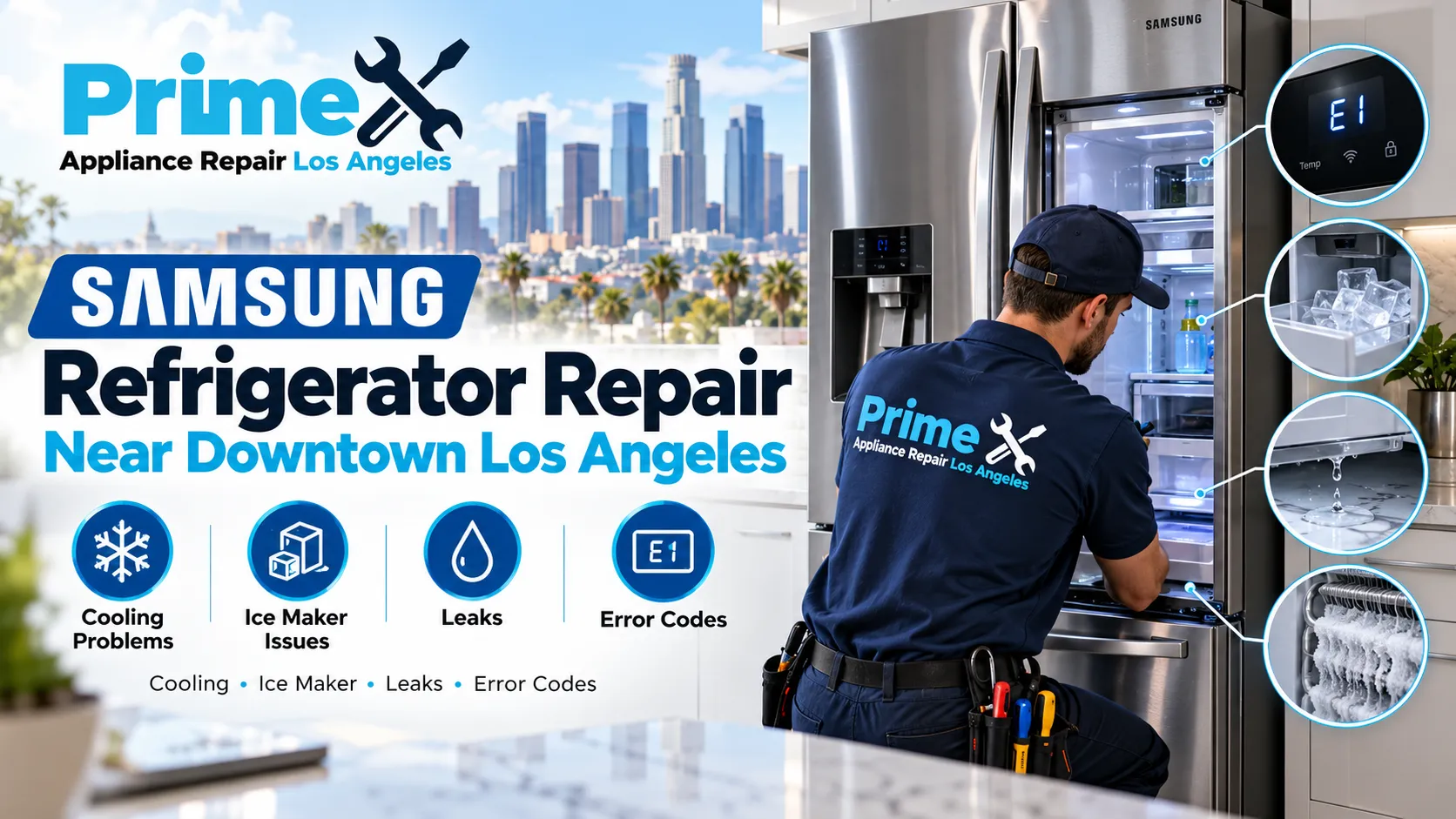
Refrigerator Not Cooling Samsung: What Should You Check?

When a Samsung refrigerator is not cooling, begin with universal refrigerator checks before assuming that a Samsung-specific component has failed. Confirm the temperature settings, check for blocked vents, verify that the doors seal properly, and make sure the refrigerator has not entered a mode that disables cooling.

Depending on the model, additional possibilities can include fan problems, frost accumulation around the evaporator, sensors, control components, or sealed-system issues.

Samsung refrigerators vary considerably by model, so the model-specific manual and diagnostic information should guide troubleshooting rather than generic reset procedures found online.

Avoid repeatedly resetting the appliance if it continues to lose cooling. A reset may clear a temporary control issue, but it cannot repair a failed mechanical or electrical component.

Whirlpool Refrigerator Not Cooling: What Are the Common Causes?

If a Whirlpool refrigerator is not cooling, first check the temperature controls, door closure, food placement, airflow vents, and condenser area where applicable.

If the freezer remains cold while the refrigerator compartment is warm, restricted airflow or an evaporator fan-related issue may be involved. If neither compartment cools properly, possible causes become broader and may include:

  • Condenser airflow problems
  • Fan failure
  • Start-device problems
  • Temperature controls or sensors
  • Defrost-related faults
  • Compressor or sealed-system problems

Whirlpool produces many refrigerator configurations, including side-by-side, French-door, top-freezer, and bottom-freezer models. The correct troubleshooting process therefore depends on the specific model.

Haier Refrigerator Not Cooling: What Should You Do?

For a Haier refrigerator not cooling, check the power supply, temperature setting, ventilation around the appliance, door gasket, internal air vents, and whether the unit was recently installed or moved. A newly installed refrigerator may require time to reach its normal operating temperature.

If an established Haier refrigerator suddenly stops cooling, listen for fan and compressor activity and check for abnormal frost. Persistent cooling failure should be professionally diagnosed rather than addressed by randomly replacing parts.

Why Is a New Refrigerator Not Cooling?

A new refrigerator not cooling does not automatically mean it is defective. Several installation-related factors can affect initial cooling.

First, confirm that cooling has actually been activated. Some display units or newly delivered appliances may be configured in a showroom-type mode. Also check whether the appliance has enough ventilation around it according to its installation instructions.

After installation, the refrigerator needs time to cool down to the selected temperature. Opening the doors frequently or immediately filling the unit with large quantities of warm food can extend that process.

If a new refrigerator still fails to cool after the manufacturer’s recommended startup period, contact the retailer or manufacturer before attempting repairs that could affect warranty coverage.

How Can You Troubleshoot a Refrigerator That Is Not Cooling?

Homeowners can perform several safe checks before requesting service.

Step 1: Verify the Actual Temperature

Do not rely only on how cold a shelf feels. Use an appliance thermometer where possible. This helps distinguish a true cooling failure from normal temperature cycling.

Step 2: Check the Temperature Controls

Verify that cooling is enabled and that the selected temperatures are appropriate. If the control panel displays an error code, record it before turning the refrigerator off. That information may help with diagnosis.

Step 3: Check the Doors

Make sure nothing prevents either door from closing. Inspect and clean the gaskets if necessary.

Step 4: Check Internal Airflow

Look for containers blocking air vents. Give cold air room to circulate the compartment.

Step 5: Inspect for Frost

Heavy frost on an interior freezer panel may suggest a defrost or airflow problem. Do not use knives, screwdrivers, or other sharp objects to remove ice because they can damage refrigerant lines or interior surfaces.

Step 6: Inspect Accessible Condenser Areas

If your refrigerator has owner-accessible condenser coils or ventilation areas, check for excessive dust. Follow the manufacturer’s maintenance instructions rather than removing service panels unnecessarily.

Step 7: Listen to the Refrigerator

Notice whether fans operate and whether the appliance makes repeated clicks, loud buzzing, scraping, or other unusual sounds. These observations can be useful when explaining the problem to a repair technician.

When Should You Call a Refrigerator Repair Technician?

Professional diagnosis is recommended when basic cleaning, temperature, door, and airflow checks do not solve the problem. You should also consider professional service when:

  • Both the refrigerator and freezer remain warm.
  • The compressor appears unable to start.
  • You hear repeated abnormal clicking or buzzing.
  • A fan is not operating normally.
  • Heavy frost keeps returning.
  • The refrigerator repeatedly trips a circuit breaker.
  • An error code persists.
  • You suspect an electrical, refrigerant, compressor, or sealed-system problem.
  • The refrigerator cools temporarily and then becomes warm again.

Refrigerant circuits and high-voltage electrical components are not appropriate DIY repair areas. Proper diagnosis also helps prevent unnecessary parts replacement.

Refrigerator Not Cooling in Los Angeles: Does the Local Climate Matter?

Los Angeles weather can increase the workload on a refrigerator, particularly when the appliance is installed in a hot kitchen, poorly ventilated enclosure, garage, or another area where ambient temperatures become high.

A refrigerator works by moving heat from inside the cabinet to the surrounding environment. Higher room temperatures can make that process more demanding.

Good installation practices matter. Maintain the ventilation clearance specified by the manufacturer, keep condenser areas clean where applicable, avoid placing the refrigerator beside strong heat sources, and make sure the doors seal correctly.

During periods of hot weather, frequent door opening and placing large quantities of warm food inside the appliance can also temporarily increase cooling time.

What Should You Do With Food When the Refrigerator Stops Cooling?

Food safety should be treated separately from appliance troubleshooting. Keep refrigerator and freezer doors closed as much as possible while you determine what is wrong. Every unnecessary opening allows cold air to escape.

According to standard U.S. food-safety guidance, a refrigerator should generally remain at 40°F or below. If perishable food has been held above safe refrigeration temperatures for too long, appearance or smell alone cannot reliably determine whether it is safe. When uncertain, follow current USDA or FDA food-safety guidance rather than taking a chance with high-risk foods.

Can You Fix a Refrigerator That Is Not Cooling Yourself?

It depends on the cause. Simple issues such as blocked vents, an incorrect temperature setting, dirty accessible coils, or a door obstruction may be suitable for homeowner troubleshooting.

Repairs involving electrical components, refrigerant, compressors, sealed-system work, internal wiring, or extensive disassembly should generally be left to trained technicians. A useful rule is this: maintenance and external checks can often be DIY; electrical and refrigeration-system diagnosis usually should not be.

How Can You Prevent Refrigerator Cooling Problems?

Routine care cannot prevent every component failure, but it can reduce avoidable cooling problems. A few practical habits include:

  • Keep refrigerator and freezer vents unobstructed.
  • Avoid overpacking the compartments.
  • Clean accessible condenser areas according to the owner’s manual.
  • Wipe door gaskets and inspect them periodically.
  • Make sure doors close completely.
  • Maintain adequate ventilation around the refrigerator.
  • Avoid putting very hot containers directly into the refrigerator.
  • Monitor temperatures with an appliance thermometer if cooling performance is uncertain.
  • Address unusual noises, frost, or temperature changes before they become severe.

Preventive maintenance is particularly useful for refrigerators working in warm environments or busy households where doors are opened frequently.

Frequently Asked Questions

What is the first thing to check when a refrigerator stops cooling?

Check that the refrigerator has power and that its cooling and temperature controls are set correctly. Then inspect door closure, airflow vents, and accessible condenser areas.

Why is my fridge not cooling but the light is on?

The refrigerator has electrical power, but the cooling system may not be functioning correctly. Blocked airflow, fan problems, defrost faults, controls, or compressor-related issues are possible.

Why is my freezer cold but my refrigerator warm?

Restricted airflow is a common reason. Blocked vents, an evaporator fan problem, or excessive frost around the evaporator can prevent cold air from reaching the refrigerator section.

Can unplugging a refrigerator fix a cooling problem?

A power cycle may resolve some temporary electronic issues, but it will not repair a failed fan, compressor, relay, sensor, defrost component, or refrigerant-system problem.

How long should a new refrigerator take to get cold?

Cooling time varies by model, room temperature, installation conditions, and how often the doors are opened. Follow the startup guidance in the manufacturer’s manual for your specific refrigerator.

Why is my refrigerator running but not getting cold?

The refrigerator may have inadequate airflow, dirty condenser components, a fan issue, frost buildup, a control problem, or a sealed-system fault. Running sounds alone do not confirm that the cooling system is working correctly.

Should I repair or replace a refrigerator that is not cooling?

It depends on the refrigerator’s age, condition, repair cost, warranty status, efficiency, and the failed component. A professional diagnosis can help you compare repair cost with replacement value.

Conclusion

When dealing with a refrigerator not cooling, first check the power, temperature settings, door seals, airflow vents, and condenser area. If the freezer is cold but the fridge is warm, blocked airflow, frost buildup, or a faulty fan may be responsible.

Whether you have a Samsung, Whirlpool, Haier, or another refrigerator brand, persistent cooling problems may require professional diagnosis. Homeowners in Los Angeles, California, can contact Prime Appliance Repair LA for reliable refrigerator troubleshooting and repair. Always keep food safety in mind and avoid leaving perishable food at unsafe temperatures.