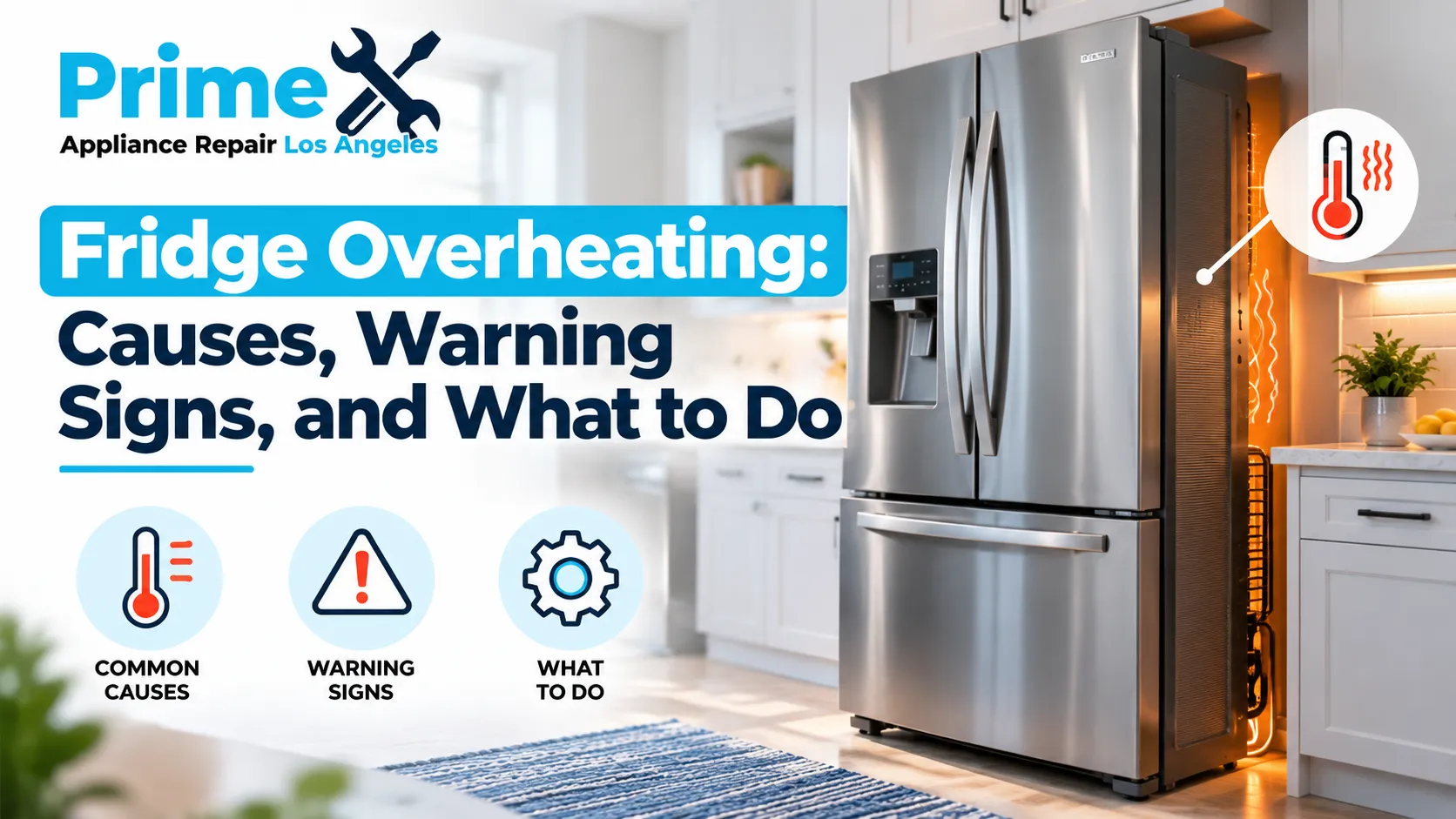

Fridge Overheating: Causes, Warning Signs, and What to Do
Is It Normal for a Refrigerator to Feel Hot?
Yes. Some warmth on the outside of a refrigerator is normal. A refrigerator does not create cold air without producing heat. Its cooling system removes heat from inside the food compartments and releases that heat outside the appliance. Depending on the refrigerator design, you may feel warmth:
- On the sides
- Behind the refrigerator
- Around the front edges
- Between the refrigerator and freezer doors
- Along the door gasket area
Whirlpool explains that some refrigerators use heat loops inside the cabinet near the door seals. These areas may become warm because the heat helps prevent moisture and frost from forming around the refrigerator exterior.
The concern begins when the refrigerator becomes extremely hot, cooling performance drops, or the compressor appears to run continuously.
Why Is My Fridge Very Hot on the Outside?

If you are wondering, “Why is my fridge very hot on the outside?”, there are several possible explanations. Some are completely normal. Others point to a cooling or airflow problem.
The Refrigerator Is Releasing Heat
Heat on the cabinet can simply mean the refrigeration system is working. The compressor moves refrigerant through the system. Heat collected from inside the refrigerator then needs somewhere to go.
Depending on the model, that heat may leave through condenser coils under or behind the appliance or through tubing built into the refrigerator cabinet. This is why the sides of some refrigerators can feel surprisingly warm.
The Refrigerator Has Been Running Longer Than Usual
Your fridge may run longer after:
- A large grocery load
- Frequent door opening
- A recent power interruption
- Initial installation
- A major temperature adjustment
- Warm food being added
- Very hot indoor conditions
Whirlpool notes that the refrigerator exterior may temporarily feel warmer when the appliance is cooling down, handling a fresh food load, or experiencing heavy use. Temporary warmth under these conditions is usually less concerning if the refrigerator is still maintaining a safe internal temperature.
Why Is the Inside of My Fridge Hot?
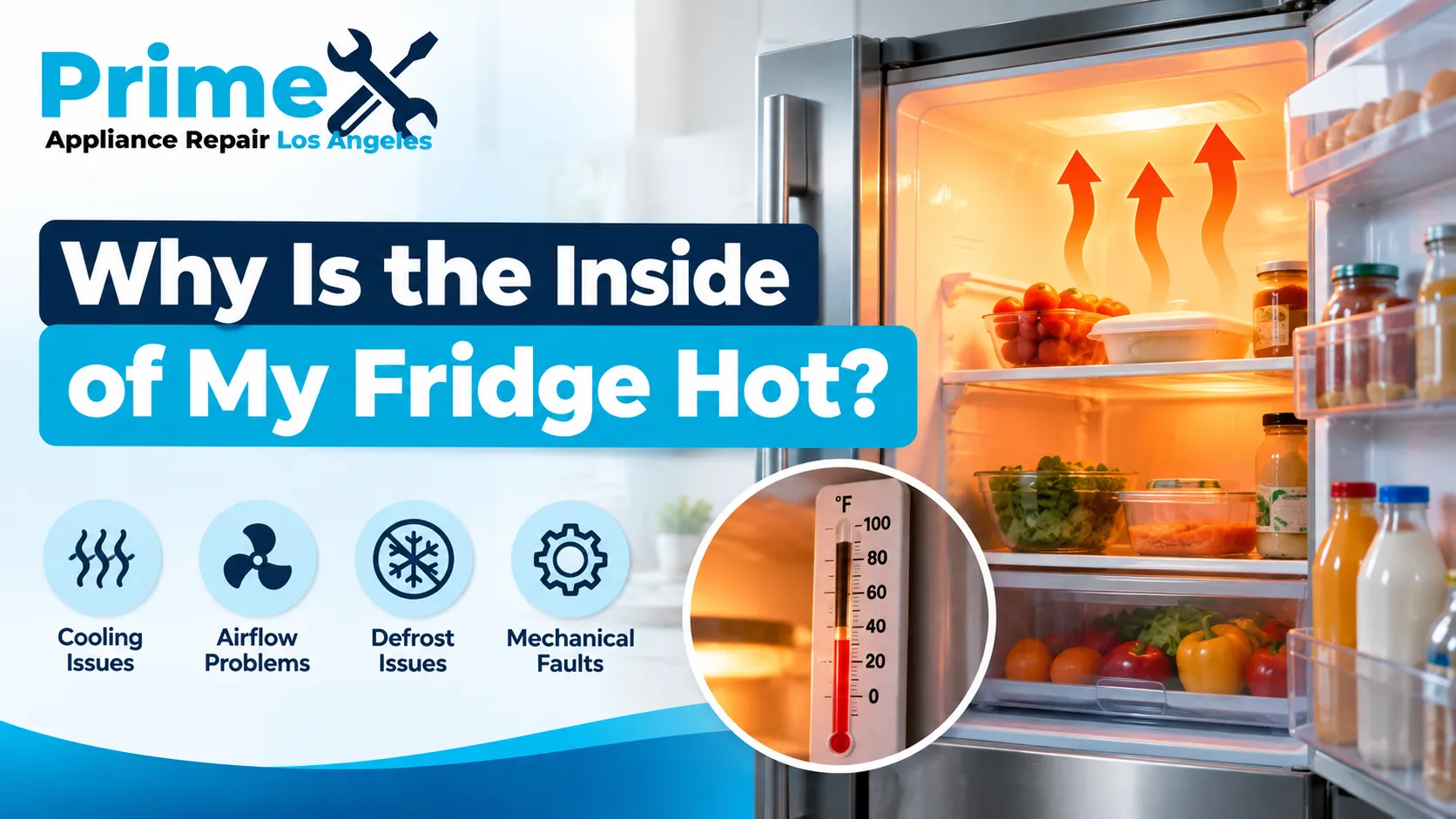
A hot refrigerator interior is more serious than a warm exterior. Your refrigerator should keep food at 40°F or below, according to the USDA. A freezer should generally remain around 0°F.
If the inside of your refrigerator feels warm, check the actual temperature with an appliance thermometer instead of relying only on how the air feels. Possible reasons include:
- A door that is not closing completely
- Damaged or dirty door gaskets
- Blocked interior air vents
- Too much food blocking airflow
- A failed evaporator or condenser fan
- Dirty condenser coils
- Compressor trouble
- Defrost system problems
- Incorrect temperature settings
- Electrical or control problems
Opening the refrigerator also lets cold air escape quickly, so the air may briefly feel warmer even when the food and shelves are still properly chilled. If the refrigerator remains above 40°F, the issue should not be ignored.
Refrigerator Overheating Symptoms: What Is Normal and What Is Not?
The location of the heat often gives useful clues.
What You Notice | Possible Explanation | Level of Concern |
Mild warmth on refrigerator sides | Normal heat release | Usually normal |
Warm strip between doors | Anti-condensation or heat loop operation | Often normal |
Hot area behind refrigerator | Compressor and condenser releasing heat | Often normal |
Refrigerator hotter during hot weather | Longer compressor run time | Monitor |
Hot exterior with poor cooling | Airflow, condenser, fan, or compressor issue | Needs attention |
Refrigerator runs almost constantly | High heat load or mechanical problem | Investigate |
Food is becoming warm | Cooling system problem | High priority |
Burning smell or electrical odor | Possible electrical failure | Stop use and seek service |
Unusual clicking, buzzing, or repeated starting | Possible electrical or compressor issue | Professional diagnosis recommended |
The key question is not simply whether the cabinet feels warm. It is whether the refrigerator is still cooling correctly.
Why Is the Strip Between Fridge and Freezer Hot?
The strip between the fridge and freezer being hot worries many homeowners, especially on side-by-side and French-door refrigerators. This strip is often called the mullion.
Manufacturers may intentionally warm this area to prevent condensation around the door seals. Without that heat, moisture could collect around the cabinet opening and gasket areas.
Whirlpool states that warmth around the mullion and cabinet flanges can come from a heat loop inside the refrigerator walls. So if your refrigerator is:
- Cooling normally
- Not producing unusual smells
- Not making abnormal sounds
- Not running constantly
A warm strip between the doors may be completely normal. However, if the strip becomes unusually hot and remains that way, airflow around the condenser should be checked.
Refrigerator Hot to the Touch Where Two Doors Meet: Should You Worry?
If your refrigerator is hot to the touch where two doors meet, the refrigerator may be using that heat to control moisture around the seals. This is particularly common around door openings. The area may become warmer during:
- Hot weather
- Initial startup
- Heavy refrigerator use
- Long cooling cycles
Whirlpool notes that these warm areas can remain noticeably warm for a period while the refrigerator stabilizes.
Heat between the doors becomes more concerning if it appears alongside poor cooling, nonstop operation, unusual noise, or a very hot compressor area.
Why Is It Hot Behind the Fridge?
Feeling hot behind the fridge is usually expected. The refrigerator must release the heat removed from your food. On many models, major cooling components are located underneath or toward the rear of the appliance.
The area may therefore become warm while the compressor is operating. The problem occurs when the refrigerator cannot get rid of this heat efficiently.
Common reasons include poor clearance behind the appliance, heavy dust buildup, blocked ventilation, or condenser fan trouble. Always follow the clearance requirements in the owner’s manual for your specific refrigerator. Manufacturer requirements differ by model.
Can Dirty Condenser Coils Cause Fridge Overheating?
Yes. On models with accessible condenser coils, heavy dust and debris can reduce heat transfer. Condenser coils help release heat from the refrigeration system. If those coils become covered with lint, dirt, or pet hair, the refrigerator may have to work harder.
Whirlpool specifically recommends checking the condenser for excessive dirt or debris when the refrigerator exterior continually feels unusually hot. Before cleaning anything, unplug the refrigerator and follow the manufacturer’s instructions.
Do not remove sealed panels or work around electrical or refrigeration components unless the owner’s manual specifically identifies the area as user-serviceable. Some newer refrigerators have condenser systems that require little or no homeowner cleaning.
Can Poor Ventilation Make a Refrigerator Overheat?
Yes. A refrigerator needs space to release heat. If the appliance is pushed tightly against a wall, packed into a cabinet opening with inadequate clearance, or surrounded by objects that restrict airflow, heat may build up.
The exact spacing requirement depends on the model, which is why the owner’s manual should always be your primary guide. Whirlpool also advises keeping refrigerators away from heat-producing appliances and avoiding blocked ventilation areas.
Samsung’s U.S. troubleshooting guidance recommends providing space around applicable refrigerator models so heat can escape and keeping interior vents unobstructed.
Why Does Fridge Overheating in Hot Weather Happen?
Fridge overheating in hot weather is often related to increased cooling demand. When the kitchen becomes hotter, the refrigerator has to work harder to keep its interior cold. Warm air also enters every time the door opens.
During a Los Angeles heat wave, a refrigerator located near a sunny window, oven, cooktop, or other heat source may experience even more heat load.
Longer compressor operation also means more heat is released outside the refrigerator. Samsung recommends keeping refrigerators in climate-controlled areas, away from direct sunlight and heat sources such as ovens or cooktops. To reduce unnecessary strain during hot conditions:
- Leave proper ventilation around the appliance.
- Keep the door closed as much as practical.
- Do not block interior air vents with food.
- Check that door gaskets seal correctly.
- Keep the refrigerator away from direct sunlight where possible.
- Make sure the refrigerator is maintaining 40°F or below.
Do not simply turn the temperature control to the coldest possible setting unless the manufacturer’s instructions recommend doing so. An underlying cooling problem still needs to be corrected.
Why Is My Whirlpool Fridge Overheating?
A Whirlpool fridge overheating does not automatically mean the refrigerator is failing. Whirlpool explains that exterior warmth can occur because condenser loops or heat loops may be built into the refrigerator cabinet. The area near the door seals may also be intentionally warmed to prevent condensation.
If your Whirlpool refrigerator seems hotter than usual, check:
- Whether the food compartment is still cold.
- Whether the doors are sealing properly.
- Whether ventilation is blocked.
- Whether accessible condenser areas have heavy dust buildup.
- Whether the refrigerator has recently been heavily loaded.
- Whether the room has become unusually warm.
If the refrigerator is no longer cooling correctly, consult the model-specific Whirlpool manual or arrange professional diagnosis.
Why Is My Samsung Fridge Hot Between Doors?
A Samsung fridge hot between doors can also be related to normal heat dissipation. Samsung explains that refrigerator side walls and front areas may become warm during normal operation because the cooling system must release heat. Warmth can be more noticeable during hot weather or initial operation.
For a Samsung refrigerator that feels unusually hot, also check whether:
- Cooling performance has dropped.
- Interior vents are blocked.
- Door seals are dirty or damaged.
- The appliance is too close to a heat source.
- There is enough space around the refrigerator.
- An error code appears.
- Unusual noises are present.
Samsung says service may be appropriate when cooling problems remain after normal troubleshooting steps.
Can a Bad Door Seal Make the Refrigerator Overheat?
Indirectly, yes. A damaged refrigerator gasket allows warm room air to enter the cabinet. The refrigerator then has to remove that extra heat, which may cause longer compressor cycles and higher exterior temperatures. Check the entire gasket for:
- Tears
- Cracks
- Warping
- Food residue
- Areas pulling away from the door
- Objects preventing the door from closing
Samsung recommends keeping door seals clean and checking whether the doors seal correctly when troubleshooting cooling problems.
A refrigerator door that repeatedly stays slightly open can waste energy and eventually cause food temperatures to rise.
Can Overloading a Refrigerator Cause Cooling Problems?
Yes, especially when food blocks the air vents. Cold air needs to circulate throughout the refrigerator. Packing containers tightly against vents can create warm spots even when the cooling system is operating. Samsung advises leaving space around interior vents so air can circulate properly.
Instead of packing every shelf tightly, organize food so air can move through the compartment. This is especially important when you notice one area of the refrigerator is cold while another area feels unusually warm.
How Can You Troubleshoot an Overheating Fridge?
Start with simple checks before assuming that a major component has failed.
Step 1: Measure the Inside Temperature
Place an appliance thermometer inside the refrigerator. USDA guidance says a refrigerator should maintain 40°F or below. If the temperature is safely below 40°F and only certain exterior areas feel warm, you may simply be noticing normal heat release.
Step 2: Check the Doors
Make sure every door closes completely. Look for containers, drawers, or shelves that could be preventing closure. Inspect the gasket for dirt or damage.
Step 3: Check Interior Airflow
Make sure food is not pressed directly against air vents. Rearrange heavily packed shelves if needed.
Step 4: Inspect the Space Around the Fridge
Check that the appliance has the ventilation clearance required by its manufacturer. Do not block vents or tightly surround the refrigerator with stored items.
Step 5: Check for Dust Where User Cleaning Is Allowed
If your model has accessible condenser areas that the owner’s manual says can be cleaned, unplug the refrigerator and remove dust carefully according to those instructions.
Step 6: Listen to the Refrigerator
Pay attention to new sounds. Normal humming is common, but repeated clicking, unusually loud buzzing, grinding, or fan noises may indicate a problem that needs diagnosis.
Step 7: Monitor Cooling
After making basic corrections, monitor the actual refrigerator temperature. If the unit continues getting hotter or food temperatures continue rising, professional service is the safer next step.
When Does Fridge Overheating Need Professional Repair?
Professional refrigerator repair should be considered when overheating appears together with a clear performance problem. Warning signs include:
- Refrigerator temperature staying above 40°F
- Freezer food beginning to soften
- Compressor running almost continuously
- Exterior becoming unusually or painfully hot
- Repeated clicking or abnormal buzzing
- Fan not operating normally
- Burning or electrical odor
- Refrigerator repeatedly shutting off
- Error codes
- Water or frost problems combined with poor cooling
Do not attempt to open the sealed refrigeration system or repair compressor wiring yourself. These systems involve electrical components and pressurized refrigerant and should be diagnosed by a qualified appliance technician.
Is Food Safe If the Refrigerator Has Been Overheating?
Food safety depends on the temperature inside the refrigerator, not the temperature of its outside walls. According to the USDA, refrigerated food should be held at 40°F or below.
If perishable food has been above 40°F for more than two hours, it may no longer be safe. USDA guidance recommends discarding many refrigerated perishables that have remained above this temperature for longer than two hours.
Do not rely on smell or appearance alone to decide whether food is safe. An appliance thermometer gives you much better information.
How Can You Prevent Refrigerator Overheating?
A few simple habits can reduce unnecessary stress on the cooling system.
- Give the refrigerator the ventilation space specified in its manual.
- Keep exterior ventilation areas free from heavy dust.
- Do not place the fridge beside an oven or another major heat source when avoidable.
- Avoid leaving the doors open for long periods.
- Keep door gaskets clean.
- Replace damaged seals when needed.
- Do not block interior air vents with food.
- Use an appliance thermometer to monitor cooling performance.
- Investigate unusual noises or rising temperatures early.
Preventive care cannot stop every mechanical failure, but it can reduce avoidable cooling problems and help you recognize a developing fault sooner.