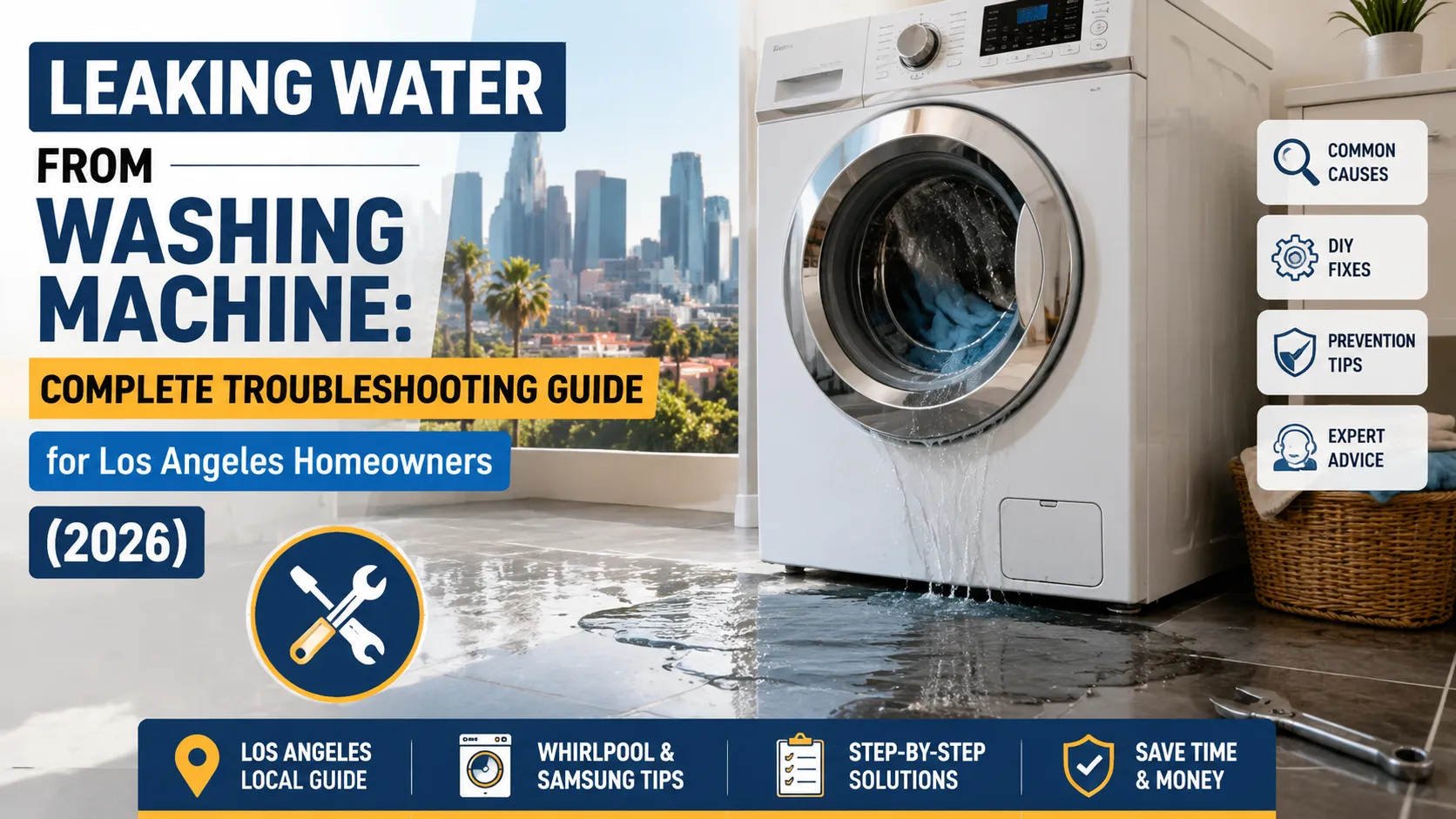
Leaking Water From Washing Machine: Complete Troubleshooting Guide for Los Angeles Homeowners (2026)
Why Does a Washing Machine Start Leaking?
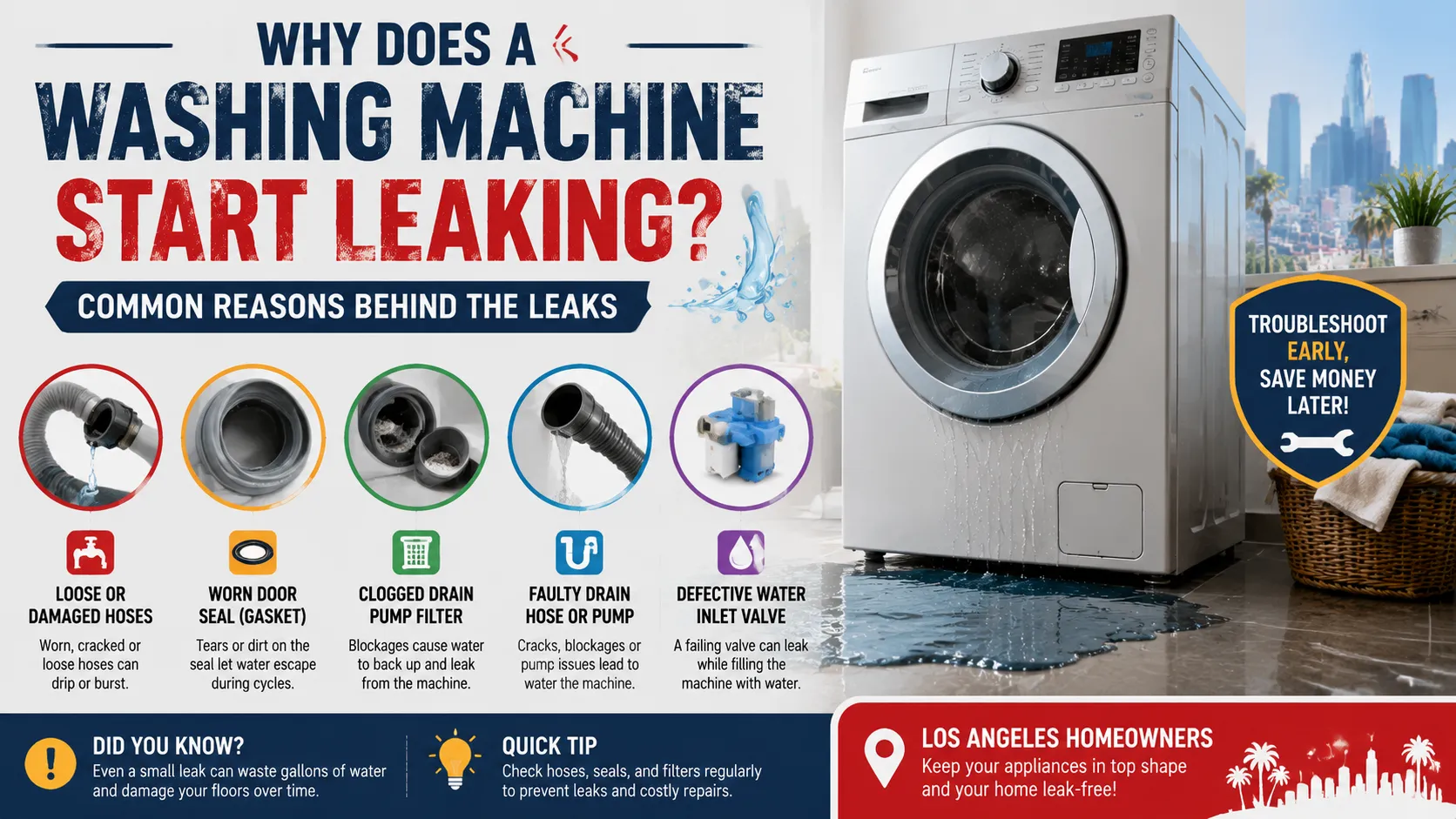
A washing machine works with several water supply and drainage components. If even one of these parts becomes loose, cracked, clogged, or worn out, water can escape during different stages of the wash cycle.
Most leaks develop gradually rather than appearing overnight. You may first notice a few drops of water after each wash before the problem becomes more obvious.
Some leaks occur only while the machine is filling with water. Others appear during draining or spinning. Paying attention to when the leak happens provides valuable clues during diagnosis.
What Are the Most Common Causes of a Leaking Washing Machine?
Several issues can cause water to leak from a washing machine. While the symptoms may look similar, each problem requires a different solution.
Worn or Loose Water Supply Hoses
The water supply hoses connect your home’s plumbing to the washing machine. Over time, constant water pressure, vibration, and age can weaken these hoses. Common signs include:
- Water pooling behind the washing machine
- Dripping connections
- Wet walls near the appliance
- Small cracks along the hose surface
Even a tiny split can release a surprising amount of water during every wash cycle.
Damaged Door Seal
Front-load washing machines use a thick rubber gasket around the door to prevent water from escaping. Coins, hairpins, pet hair, detergent buildup, and clothing fibers can slowly damage this seal. Once the rubber develops a tear, water often leaks from the front of the machine.
In many homes, the seal also collects moisture after every wash. Without regular cleaning, mold and mildew weaken the rubber over time.
Clogged Drain Pump Filter
Most modern washing machines include a drain pump filter that catches lint, buttons, coins, and other small objects before they reach the pump.
When this filter becomes blocked, water cannot drain efficiently. Pressure builds inside the machine, sometimes forcing water to leak from unexpected places. Cleaning the filter every few months helps prevent this issue.
Faulty Drain Pump
The drain pump removes dirty water after each wash cycle. After years of use, the pump housing may crack, internal seals may wear out, or the impeller may become damaged. Leaks caused by the drain pump usually appear underneath the washing machine, especially during draining.
Overloading the Washing Machine
Many homeowners assume fitting more clothes into one load saves time. In reality, overloading creates excessive movement inside the drum. This extra movement places stress on hoses, door seals, bearings, and suspension components. An overloaded washer may also force water past the door gasket during high-speed spinning.
Too Much Detergent
Using more detergent does not produce cleaner clothes. Excess detergent creates large amounts of foam that interfere with the washer’s normal water circulation. The extra suds may overflow through vents or seals, making it appear as though the machine has a serious leak. High-efficiency (HE) washing machines require HE detergent in the recommended amount.
Cracked Internal Hoses
Inside every washing machine are several smaller hoses carrying water between the inlet valve, detergent dispenser, tub, and drain pump.
Because these hoses are hidden inside the cabinet, small leaks often go unnoticed until water begins collecting underneath the appliance. Older washing machines are particularly vulnerable because rubber becomes brittle with age.
Faulty Water Inlet Valve
The inlet valve controls how much water enters the washing machine. Mineral deposits, corrosion, or internal wear can prevent the valve from sealing properly. Common symptoms include:
- Water leaking while filling
- Slow dripping after the cycle ends
- Moisture around the rear inlet connections
Homes in Los Angeles often experience hard water buildup, which may shorten the lifespan of inlet valves if regular maintenance is ignored.
Does the Location of the Leak Tell You What’s Wrong?
Yes. The location of the water often provides the fastest clue to the source of the problem.
Where You See Water | Most Likely Cause | Difficulty to Repair |
Front of washer | Door seal, overloaded drum, excessive detergent | Easy to Moderate |
Behind washer | Water supply hose, inlet valve | Easy |
Underneath washer | Drain pump, internal hose, tub damage | Moderate |
During filling | Water inlet valve, supply hose | Easy to Moderate |
During draining | Drain hose, drain pump | Moderate |
Throughout entire cycle | Multiple possible leaks requiring inspection | Moderate to Difficult |
Rather than replacing parts at random, matching the leak location with the wash cycle helps narrow down the diagnosis much faster.
How Can You Identify Where the Leak Is Coming From?
A careful inspection often reveals the source without taking the entire machine apart. Begin by unplugging the washing machine and turning off the water supply. Pull the appliance slightly away from the wall so you can inspect both the back and the sides.
Next, dry any standing water around the machine completely. A dry floor makes it much easier to spot fresh leaks during testing. Run a short wash cycle while observing the appliance from a safe distance. Watch carefully during each stage:
- Filling
- Washing
- Draining
- Spinning
If water appears immediately, the inlet system may be responsible. If the leak only starts while draining, the drain hose or pump becomes the primary suspect. Water appearing during high-speed spinning often points toward the door seal or excessive movement inside the drum.
This simple process eliminates much of the guesswork and helps determine whether the issue is suitable for a DIY repair or requires professional service.
Why Los Angeles Homeowners Experience Washing Machine Leaks More Often
Many homes across Los Angeles have moderately hard to hard water. Over time, minerals such as calcium and magnesium build up inside water inlet valves, hoses, detergent dispensers, and internal plumbing components.
In addition, many homes use their washing machines several times each week because of larger households or busy family routines. Frequent use naturally increases wear on rubber seals, suspension systems, pumps, and hoses.
Older homes may also have aging plumbing connections that contribute to vibration and small leaks around supply fittings. Regular maintenance, proper detergent use, and annual hose inspections can significantly reduce the risk of unexpected leaks.
How to Fix a Leaking Washing Machine Safely
Not every washing machine leak requires an expensive repair. In many cases, the problem can be resolved with a careful inspection and a simple replacement part. The key is to avoid guessing. Replacing the wrong component wastes both time and money.
Before starting any inspection, unplug the washing machine and turn off both water supply valves. If the machine has recently completed a cycle, allow it to cool before working around internal components.
Check the Water Supply Hoses First
The water supply hoses are one of the most common sources of leaks because they remain under pressure even when the washing machine is not running.
Inspect both the hot and cold water hoses from end to end. Look for cracks, bulges, rust around the fittings, or signs of moisture near the connections. Sometimes the hose itself is in good condition, but the rubber washer inside the connector has worn out.
If the hose is more than five years old, replacing it is often a better long-term solution than waiting for it to fail. Stainless steel braided hoses generally last longer than standard rubber hoses and offer better protection against burst lines.
Inspect the Door Gasket Carefully
Front-load washing machines rely on a flexible rubber gasket to keep water inside the drum. Open the door and examine the entire seal. Small objects such as coins, nails, keys, or hair clips can become trapped inside the folds of the rubber. These objects may create tiny cuts that gradually turn into larger tears.
If the gasket is simply dirty, cleaning it thoroughly may solve the problem. However, if the rubber has ripped or lost its shape, replacement is usually the only reliable fix. Keeping the door slightly open after each wash helps the gasket dry naturally and reduces mold growth that can weaken the rubber over time.
Clean the Drain Pump Filter
A blocked drain filter is another surprisingly common cause of leaks. Most front-load washing machines include an access panel near the bottom front of the machine. Place a towel and a shallow container underneath before opening the filter because trapped water will usually drain out.
Remove lint, buttons, coins, pet hair, and other debris before reinstalling the filter securely. A loose filter cap can leak even after it has been cleaned, so make sure it is tightened correctly. Regular cleaning every two or three months helps the pump work more efficiently and reduces unnecessary strain on the drainage system.
Examine the Drain Hose
The drain hose carries wastewater from the washing machine to the home’s drain system. Check the entire hose for cracks, punctures, loose clamps, or sharp bends that could restrict water flow. If the hose has become brittle or damaged, replacement is generally inexpensive and can prevent much larger water damage later.
Also confirm that the hose is inserted into the standpipe at the recommended height. A hose positioned too low may create siphoning problems, while one installed incorrectly can overflow during draining.
Avoid Overloading the Machine
Modern washing machines are designed to handle specific load capacities. When the drum is packed too tightly, clothes cannot move freely during washing and spinning. This creates excessive vibration that stresses hoses, seals, bearings, and suspension components.
Instead of forcing large loads into one cycle, divide bulky laundry into two smaller loads. Although this takes slightly longer, it reduces wear on the appliance and often improves cleaning performance as well.
Use the Correct Amount of Detergent
Many leak complaints are actually caused by excessive detergent rather than faulty parts. High-efficiency washers require HE detergent that produces fewer suds. Using regular detergent or adding more than recommended creates excessive foam that may escape through vents or around the door seal.
Always follow the detergent manufacturer’s guidelines and adjust the amount according to load size and water hardness.
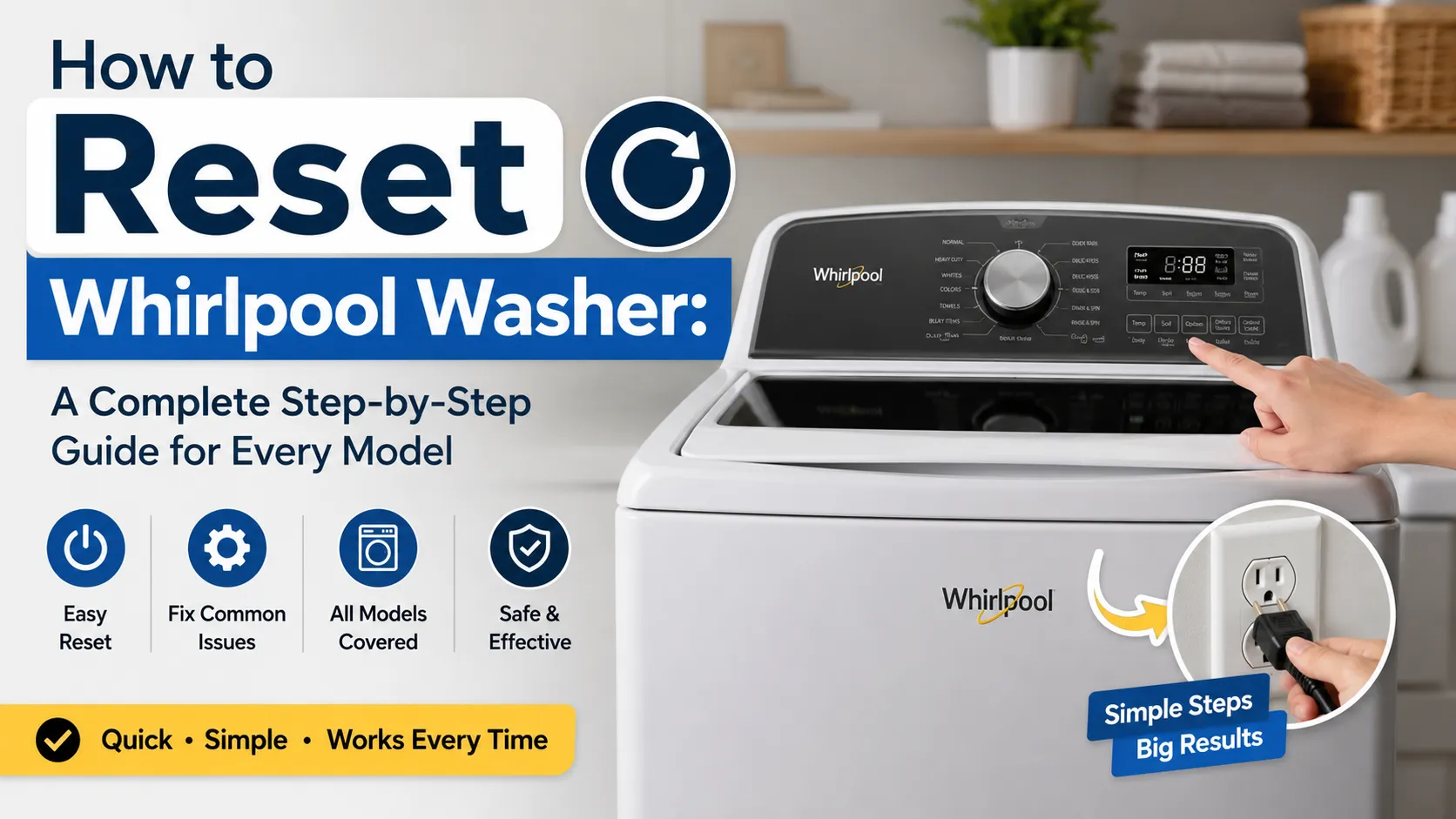
Leaking Water From Washing Machine in Los Angeles – Whirlpool
Whirlpool washing machines are widely used throughout Los Angeles because of their reliability and long service life. Like any appliance, however, they can develop leaks after years of regular use.
The most common causes include worn inlet hoses, damaged drain pumps, aging door seals, clogged detergent dispensers, and loose internal hose connections. Homes with hard water may also experience mineral buildup inside the inlet valve, restricting water flow and preventing the valve from sealing properly after each cycle.
If your Whirlpool washer leaks only while filling, inspect the inlet valve and supply hoses first. If water appears underneath during draining, the drain pump or drain hose deserves closer attention. Routine maintenance can often prevent these issues before they require major repairs.
Common Whirlpool Leak Symptoms
Symptom | Possible Cause | Recommended Action |
Water behind the washer | Loose inlet hose | Tighten or replace hose |
Water from the front | Damaged door gasket | Clean or replace gasket |
Leak during draining | Drain pump problem | Inspect pump assembly |
Constant dripping | Faulty inlet valve | Replace water inlet valve |
Water underneath machine | Internal hose leak | Professional inspection recommended |
Leaking Water From Washing Machine in Los Angeles – Samsung
Samsung washing machines include advanced sensors and efficient water management systems, but they are still vulnerable to leaks caused by normal wear. One common issue is a damaged door boot seal, especially in front-load models that handle frequent family laundry. Small tears may allow water to escape during the spin cycle.
Another issue involves clogged drain pump filters. Many homeowners overlook routine cleaning until drainage slows and water begins leaking underneath the appliance.
Samsung washers may also display error codes when drainage problems occur. Although these alerts are helpful, they should be treated as starting points rather than final diagnoses. If your Samsung washer leaks after several years of use, inspect the filter, drain hose, and inlet valve before assuming a major component has failed.
Should You Repair the Washing Machine Yourself?
Some repairs are straightforward and can be completed safely with basic tools, while others require experience and specialized equipment. Simple maintenance tasks often include tightening hose connections, cleaning the drain filter, replacing accessible hoses, and removing detergent buildup.
However, repairs involving electrical components, internal wiring, suspension systems, bearings, control boards, or the outer tub should generally be left to qualified appliance technicians. Attempting complex repairs without proper knowledge may create additional damage or compromise the machine’s safety.
When Is It Time to Call a Professional?
There comes a point when continuing to troubleshoot on your own is no longer the best option. If you’ve already inspected the obvious causes and the leak keeps returning, the issue is likely inside the machine or related to a component that requires disassembly. Consider scheduling professional service if you notice any of these situations:
- The leak continues after replacing hoses or cleaning the drain filter.
- Water is leaking from underneath the cabinet, and the source cannot be identified.
- The drum makes unusual grinding or knocking noises along with the leak.
- The machine displays repeated error codes related to filling or draining.
- There are visible signs of rust, burning smells, or electrical issues.
- The washer is still covered under the manufacturer’s warranty.
An experienced technician can pressure-test the water system, inspect internal hoses, and identify hidden problems without unnecessary part replacements.
How Can You Prevent Your Washing Machine From Leaking Again?
Most washing machine leaks don’t happen without warning. Small signs such as a damp floor, unusual vibration, or a musty smell often appear weeks before a major leak. A few simple maintenance habits can extend the life of your washer and reduce the chances of unexpected repairs.
Instead of waiting for a problem to develop, inspect your washing machine every few months. Look behind the appliance for signs of moisture, check the hoses for cracks, and make sure the machine remains level on the floor. A washer that rocks during the spin cycle places unnecessary stress on hoses, seals, and internal components.
If you live in Los Angeles, where hard water is common, mineral deposits can slowly build up inside the inlet valve and detergent dispenser. Running a washer cleaner periodically and using the recommended amount of detergent helps minimize buildup and keeps water flowing properly.
Simple Maintenance Habits That Make a Big Difference
Regular care doesn’t take much time, but it can prevent many of the problems that lead to water leaks.
- Inspect water supply hoses every six months and replace them if they show signs of wear.
- Clean the drain pump filter every two to three months.
- Wipe the rubber door gasket after each wash to remove moisture and debris.
- Avoid overloading the drum with heavy items like comforters or rugs.
- Use only the recommended amount of detergent, especially in high-efficiency machines.
- Leave the washer door slightly open after each cycle to improve airflow and reduce mold growth.
These small habits can improve washing performance while reducing strain on the appliance.
Is It Better to Repair or Replace a Leaking Washing Machine?
The answer depends on the age of the appliance, the cost of the repair, and the overall condition of the machine.
If your washer is relatively new and the leak is caused by a hose, pump, inlet valve, or door gasket, repairing it is usually the most cost-effective option. These components are commonly replaced, and the repair can often extend the appliance’s lifespan for several more years.
However, if the leak is caused by a cracked outer tub, failing transmission, or severe internal corrosion, replacement may be the smarter investment. Major structural repairs can become expensive, especially on older machines that are already approaching the end of their expected service life.
As a general guideline, if the repair cost approaches half the price of a comparable new washing machine, many homeowners choose to replace the appliance instead.
Why Regular Maintenance Saves Money
Many homeowners only think about appliance maintenance after something goes wrong. In reality, preventive care is almost always less expensive than emergency repairs.
Replacing a worn hose before it bursts may cost a small amount, while cleaning up water damage to hardwood flooring, drywall, or cabinetry can cost thousands of dollars. Routine inspections also help identify loose fittings, aging rubber components, and drainage issues before they become major problems.
Frequently Asked Questions
Why is my washing machine leaking only during the spin cycle?
A leak that appears during the spin cycle is often linked to excessive vibration, an overloaded drum, a damaged door gasket, or an internal hose that leaks only when water is forced through the system at higher pressure.
Can too much detergent cause a washing machine to leak?
Yes. Excess detergent creates excessive suds that interfere with normal water circulation. The foam can escape through vents or seals, making it appear that the machine has a mechanical problem.
Is it safe to use a washing machine if it is leaking?
No. Continuing to use a leaking washing machine can damage your flooring, increase the risk of mold, and in some cases create electrical hazards if water reaches wiring or outlets. It’s best to identify the source of the leak before using the appliance again.
Why is my front-load washing machine leaking from the door?
The most common causes are a torn door gasket, dirt trapped inside the seal, an overloaded drum, or detergent buildup that prevents the door from sealing properly.
Why is my Whirlpool washing machine leaking water in Los Angeles?
For many Whirlpool owners in Los Angeles, leaks are commonly caused by aging water supply hoses, mineral buildup from hard water, clogged drain systems, or worn door seals. Regular maintenance can help prevent these issues before they become serious.
Why is my Samsung washing machine leaking water in Los Angeles?
Samsung washing machines often leak because of blocked drain pump filters, damaged door boots, loose hose connections, or faulty inlet valves. Cleaning the filter regularly and inspecting hoses can prevent many of these problems.
Final Thoughts
A leaking washing machine is more than a minor inconvenience. Left untreated, even a small leak can damage floors, walls, and nearby cabinets while shortening the life of the appliance itself.
The good news is that many leaks are caused by components that are relatively easy to inspect and repair, such as hoses, drain filters, and door seals. Identifying when and where the leak occurs is often the fastest way to narrow down the cause.
For homeowners in Los Angeles, regular maintenance is especially important because hard water and frequent appliance use can accelerate wear on valves, hoses, and rubber seals. Taking a few minutes to inspect your washer every few months can prevent unexpected breakdowns and reduce long-term repair costs.
Whether you own a Whirlpool, Samsung, or another major brand, addressing a leak early is always the smartest approach. If basic troubleshooting doesn’t solve the issue, contacting a qualified appliance repair professional can help protect both your washing machine and your home from further damage.