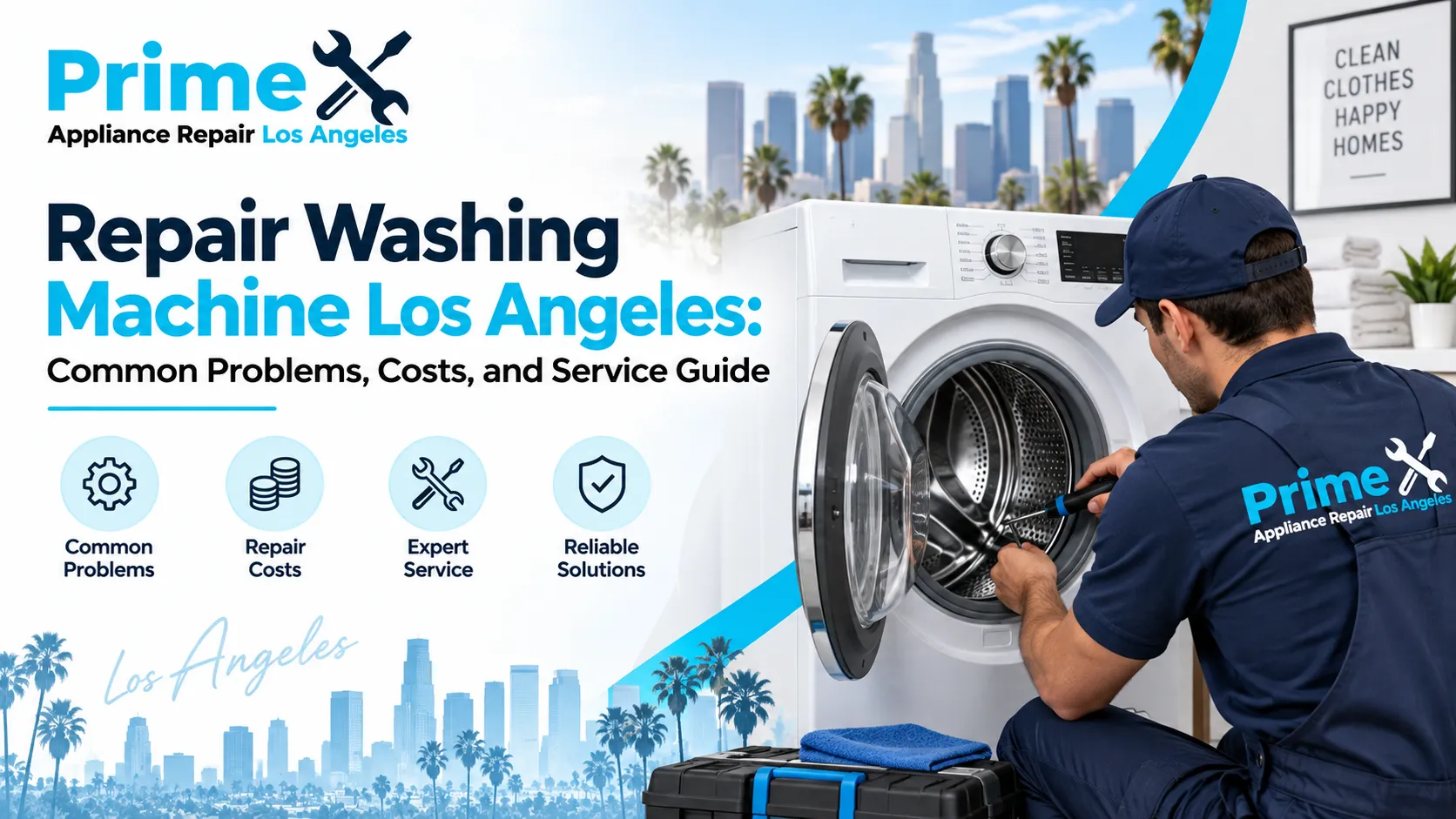
Repair Washing Machine Los Angeles: Common Problems, Costs, and Service Guide
When Does a Washing Machine Need Repair?
A washer may need repair when it cannot complete a normal wash, rinse, drain, or spin cycle. One failed cycle does not always mean a part is broken. An overloaded drum or kinked hose can cause temporary problems. Try simple checks first when it is safe to do so. You should consider professional washing machine repair if:
- The washer will not start, fill, drain, or spin.
- Water is leaking from the machine.
- The drum makes grinding, scraping, or loud banging sounds.
- Clothes remain very wet after a complete cycle.
- The same error code keeps returning.
- The machine stops during normal cycles.
- You notice smoke, sparks, or a burning smell.
Stop using the washer if there is smoke, sparking, a strong burning smell, or a major leak. Disconnect the power if you can do so safely.
What Are the Most Common Washing Machine Problems?
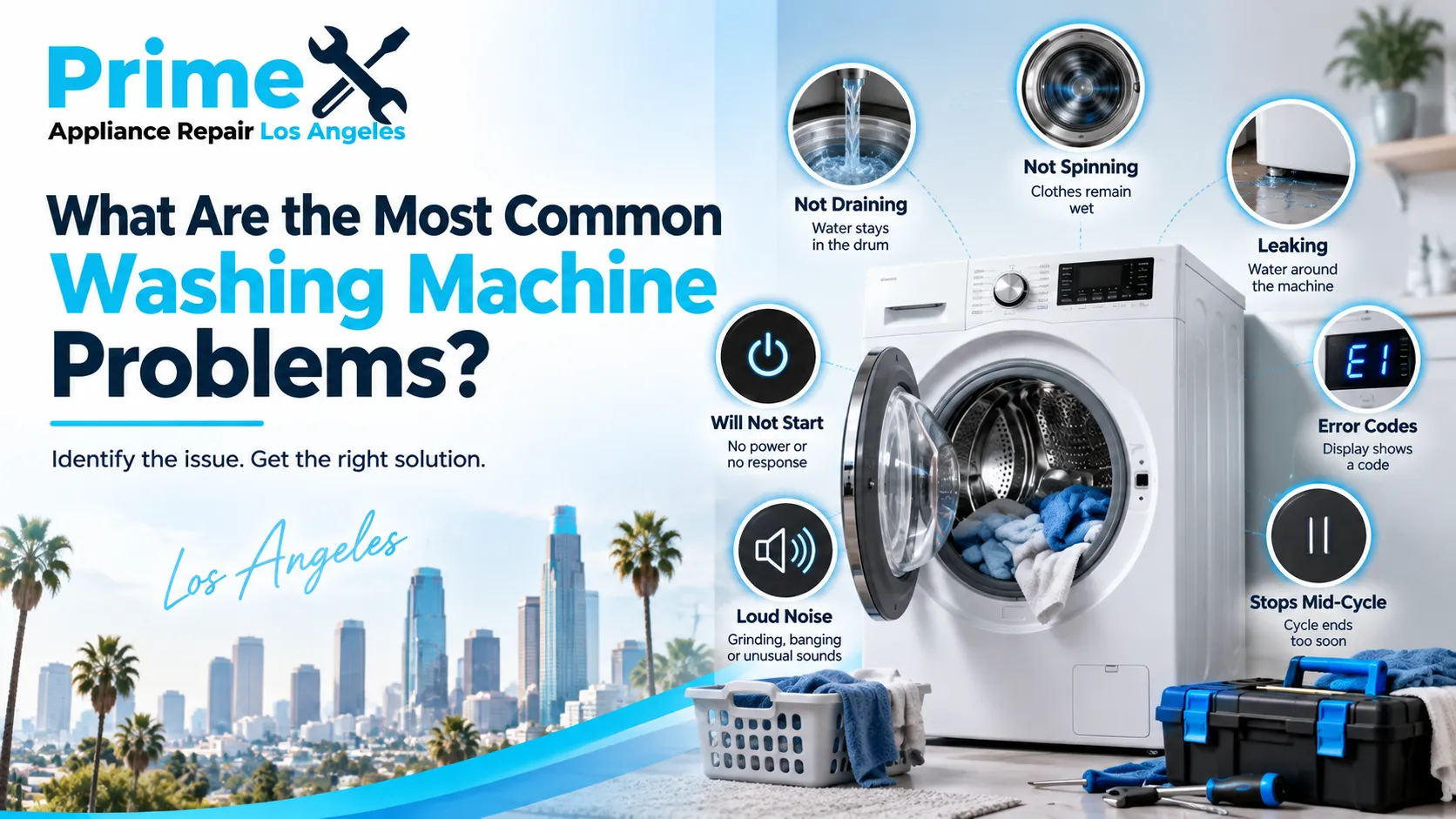
A washing machine uses several systems at the same time. These include water valves, pumps, sensors, a motor, and electronic controls. A problem with one part can sometimes look like a fault in another part. This is why a proper diagnosis is important.
Why Is My Washing Machine Not Draining?
A washer may fail to drain because of a blocked hose or clogged pump filter. A damaged drain pump can also cause the problem. Check the visible drain hose first. Make sure it is not crushed, twisted, or sharply bent.
Some washers have a pump filter that owners can clean. Follow the manufacturer’s instructions before opening or cleaning it. If the hose and accessible filter look clear but water stays in the drum, the washer may need professional service.
Do not keep restarting a washer that is full of water. This can place more stress on the appliance and may increase the risk of a leak.
Why Is My Washing Machine Not Spinning?
An unbalanced load is a common reason a washer does not spin correctly. Try removing a few items and spreading the remaining clothes evenly. Then follow the manufacturer’s instructions for restarting the cycle.
If the problem happens with normal loads, another fault may be present. The cause could involve the door lock, lid switch, motor, drive system, sensor, or control system. Top-load and front-load washers use different parts and designs. A technician may need the model number to diagnose the problem correctly.
Why Is My Washing Machine Leaking?
A leak can come from the inlet hose, drain hose, pump, detergent dispenser, door seal, or an internal connection. Check visible hoses for cracks, loose connections, or other damage. Do not open electrical or internal panels to search for the leak.
Water on the floor does not always show where the leak started. Water can move across internal surfaces before it reaches the floor. If you cannot find an obvious external cause, stop using the machine and have it inspected.
Why Is My Washer Making a Loud Noise?
Some washer noises are harmless. Coins, zippers, buttons, and an uneven load can create loud sounds. Repeated grinding, scraping, rumbling, or heavy knocking needs more attention.
Possible causes include a foreign object, worn bearing, pump problem, suspension fault, or drive-system issue. The exact cause depends on the washer. If the sound is severe, avoid running more cycles until the problem is checked.
Why Does My Washing Machine Stop Mid-Cycle?
A washer may stop because it cannot drain or fill correctly. A door-lock fault, sensor issue, or control problem may also interrupt the cycle. First, check the power and water supply. Note any error code shown on the display.
Do not keep restarting the washer if water remains inside or the machine feels unusually hot. Repeated restarts will not fix a failed component and may make the problem worse.
Washing Machine Problems: Quick Comparison
This table can help you understand common symptoms. It is a general guide, not a diagnosis.
Washer Symptom | Possible Causes | Basic Check | When to Call a Technician |
Will not start | Power issue, door or lid switch, control fault | Check power and close the door or lid | If the washer stays unresponsive |
Will not drain | Blocked hose, clogged filter, pump fault | Check accessible hose and filter | If water remains in the drum |
Will not spin | Unbalanced load, lock fault, drive issue | Redistribute the load | If the problem keeps returning |
Water leaking | Hose, seal, pump, or connection issue | Inspect visible hoses | If the leak continues or is internal |
Strong vibration | Uneven floor, heavy load, suspension problem | Level washer and adjust load | If vibration continues |
Grinding or rumbling | Foreign object, bearing, pump, or drive issue | Check for obvious loose objects | If the noise is repeated or severe |
Error code | Drain, water, motor, sensor, or control issue | Record the code and check the manual | If basic troubleshooting does not help |
Different problems can cause the same symptom. Avoid buying replacement parts based only on this table or an error code.
How Much Does Washing Machine Repair Cost in Los Angeles?
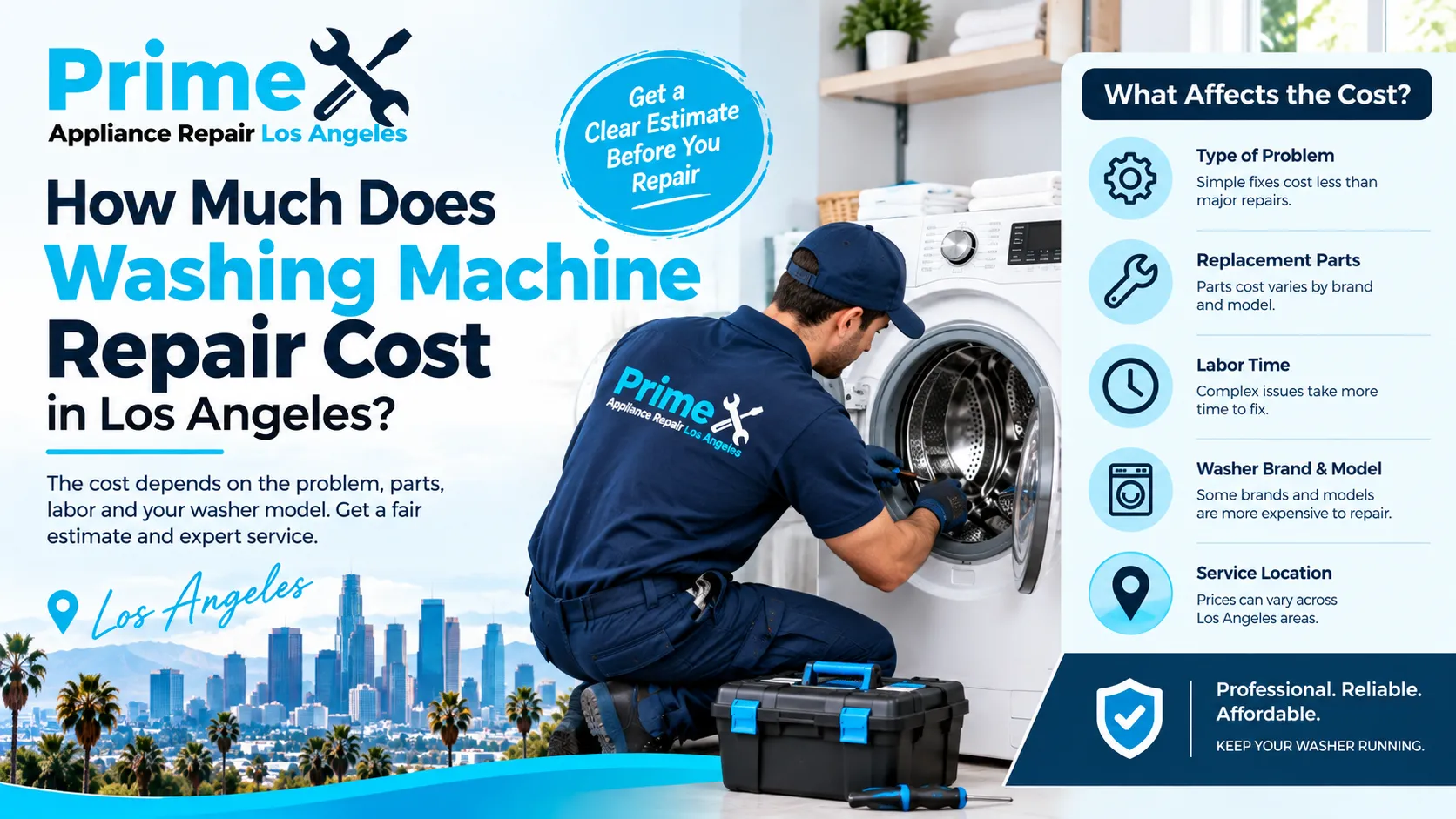
The cost of washing machine repair in Los Angeles depends on the fault and the washer model. There is no single price that applies to every repair. A simple blockage or small part replacement is usually cheaper than work involving a motor, control board, bearing assembly, or another major component.
The total price may include a diagnostic fee, labor, replacement parts, and extra time needed to access the failed component. A second visit may also affect the total if a part has to be ordered.
Ask for an estimate before approving the repair. Also ask whether the service-call fee is separate or applied toward the completed work. A clear estimate makes it easier to compare repair with replacement.
Should You Repair or Replace a Washing Machine?
Repair often makes sense when the washer is in good overall condition and has one repairable fault. For example, replacing one failed pump may be reasonable if the rest of the appliance works well. The decision becomes harder when an older washer has several recurring faults.
Consider the age and condition of the appliance. Think about previous repairs and the cost of the current problem. Parts availability also matters. Compare the repair estimate with the cost of a suitable new washer. Installation costs may affect that comparison too.
Energy and water use can also be worth considering. A newer machine may be more efficient than an older model. However, efficiency alone does not mean a working washer should always be replaced. The best choice depends on the condition of the appliance and the cost of restoring reliable operation.
What Happens During a Professional Washer Repair Visit?
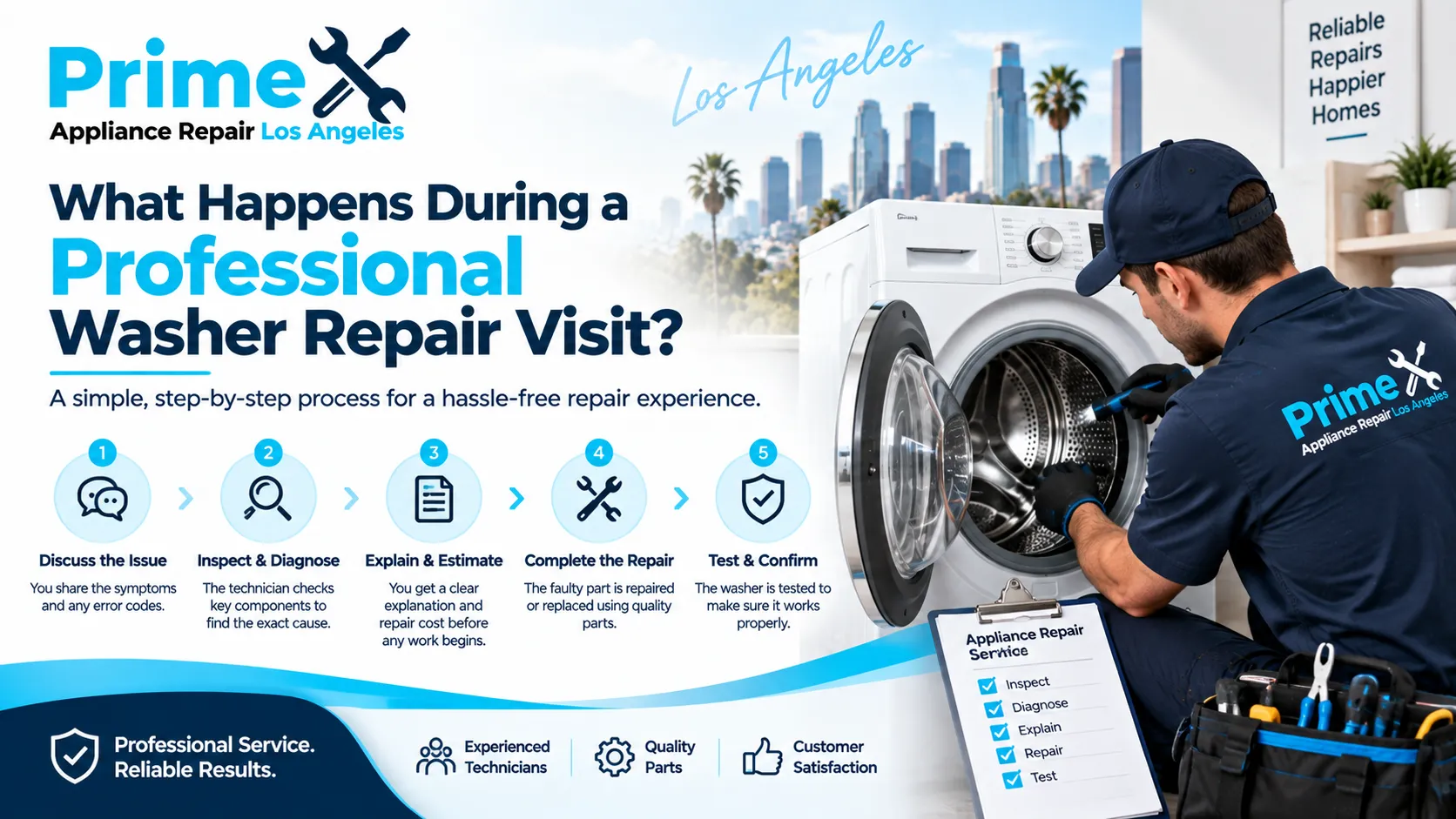
A professional visit should start with diagnosis. A technician should not simply replace parts based on a guess. The technician may ask when the problem began and what happens during a cycle. Error codes, unusual noises, leaks, and recent changes can provide useful clues.
The next step depends on the symptoms. The technician may inspect the drainage system, water supply, door lock, motor system, sensors, or controls. Once the likely fault is found, ask for an explanation of the repair and expected cost.
A reliable technician should also tell you if the washer has other visible problems that could affect its useful life. This information can help you decide whether repair is still worthwhile.
Whirlpool Washing Machine Repair in Los Angeles
If you need Whirlpool washing machine repair in Los Angeles, look for a technician who works with your type of Whirlpool washer. Whirlpool makes both top-load and front-load machines. Different models can use different drive systems, controls, locks, pumps, and diagnostic methods.
Brand experience is useful, but model-specific knowledge can be even more valuable. Find the model number before booking a service visit. Also write down any error code shown on the display.
Explain exactly what the washer does. For example, tell the technician whether it fills but does not drain, or drains but will not enter a spin cycle. These details can make the first inspection more efficient.
Samsung Washing Machine Repair in Los Angeles
Samsung washing machine repair in Los Angeles may require experience with modern electronic controls and model-specific diagnostic systems. A Samsung washer can develop drainage, door-lock, water supply, sensor, motor, or control faults. The exact design varies by model.
Before calling a repair service, find the model number and record any error code. Describe the sequence of the problem as clearly as possible. Saying that the washer fills normally but stops before draining is more useful than saying it is simply broken.
Do not bypass safety locks or open electronic components because an online video suggests a quick solution. Washers combine electricity and water. Internal work can create a serious safety risk when it is done incorrectly.
How Do You Choose the Best Washing Machine Repair Service in Los Angeles?
The best washing machine repair service in Los Angeles is not always the company with the lowest advertised price. Look for a provider that clearly explains its service area and diagnostic process. Confirm that the company works on your washer brand and type.
Ask how estimates are approved before work starts. You should also understand the company’s policy on parts and labor warranties.
Reviews can help, but read them with care. Look for patterns across many customer experiences instead of relying on one very positive or negative review. Useful reviews often mention communication, diagnostic accuracy, punctuality, and how the company handled problems after the initial repair.
Be cautious with a firm repair price given before anyone knows the fault. A fixed price can be reasonable for a clearly defined service, but many washer problems require diagnosis first.
Best Appliance Repair in Los Angeles: What Should You Ask?
If you are comparing options for appliance repair in Los Angeles, ask a few questions before you book. Confirm that the provider repairs your exact washer brand and model. Ask about the diagnostic charge and whether it goes toward an approved repair. You can also ask whether the technician carries common parts or whether a second visit may be required.
Ask what warranty applies to the completed work. If different types of replacement parts are available, ask what will be installed. Clear answers make it easier to compare companies on more than price alone.
Does “Washer Repair Near Me” Always Mean the Closest Company?
Not necessarily. A washer repair near me search usually means you want a provider that serves your area and can offer a practical appointment. Los Angeles covers a large area. Travel distance and traffic can affect service windows. Confirm that the company regularly serves your ZIP code. Ask about service-zone or travel charges before booking.
A company that is slightly farther away may still be a better option if its technicians have stronger experience with your washer model. The goal is to find a qualified provider that reliably serves your area, not simply the closest name on a map.
What Can You Safely Check Before Calling a Technician?
Simple troubleshooting may save time when the cause is minor. Start by checking that the washer has power. Make sure the water valves are open, and the door or lid closes fully.
Look at visible inlet and drain hoses for obvious kinks or damage. If the load is unbalanced, remove some clothes and redistribute the rest. Some models have an owner-accessible drain filter. Clean it only by following the instructions for your specific machine.
Record any error code before resetting the washer. These checks can give you useful information without opening the appliance.
What Information Should You Give the Repair Company?
Good information can help the technician understand the problem before arriving. Have the washer’s brand and model number ready. Tell the company whether it is a front-load or top-load machine. Describe what happens during the cycle. Mention leaks, unusual noises, smells, or water left in the drum.
Provide any error code shown on the display. A clear description could be: “The washer fills and washes, but it stops before the spin cycle and leaves water inside.” That gives the technician a much better starting point than simply saying the washer does not work.
Is DIY Washing Machine Repair Safe?
Basic maintenance and user-level troubleshooting can be safe. Internal repair is different. Checking visible hoses, leveling the washer, cleaning an accessible filter, or following an official reset process may be suitable for homeowners.
Always follow the owner’s manual for your exact model. Electrical testing and internal wiring work require more care. The same applies to motor, control board, and other internal repairs.
Do not bypass safety switches or test live electrical parts without proper training. Replacing a part without a correct diagnosis can also waste money. A drainage symptom, for example, does not always mean the drain pump itself has failed.
How Can You Help Prevent Future Washer Problems?
Regular care may reduce unnecessary wear, although it cannot prevent every failure. Avoid overloading the drum. Use the correct detergent and amount for your washer. Too much detergent can create residue and may affect washing performance.
Keep the machine level. Check accessible hoses from time to time for visible wear. Empty pockets before washing clothes. Coins and other small objects can enter areas where they cause noise or blockages.
Clean the drum, dispenser, filter, and door seal as recommended in the owner’s manual. For some front-load machines, allowing the interior to dry after a cycle can help reduce moisture and odors. Follow the manufacturer’s instructions for your model.